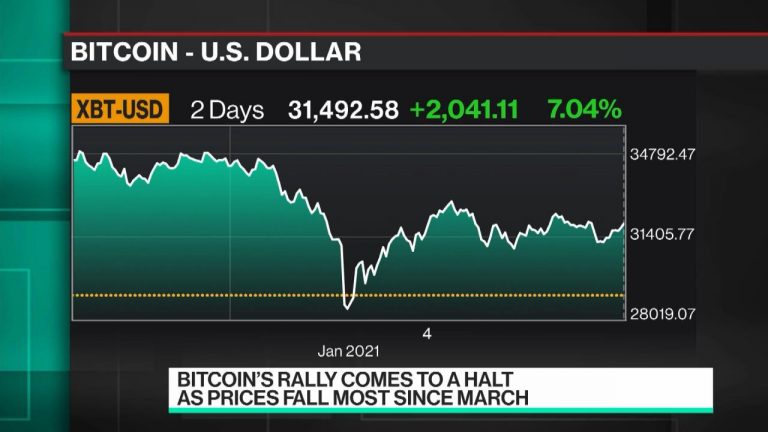
Bitcoin Price MarketWatch offers a comprehensive analysis of the cryptocurrency’s current market position. This in-depth look examines recent price trends, technical indicators, and broader market context, all based on MarketWatch’s data and expert opinions. It delves into factors driving price fluctuations and forecasts future trajectories, providing a valuable resource for investors and enthusiasts alike.
The report explores the complex interplay of factors influencing Bitcoin’s value, including macroeconomic conditions, regulatory developments, and investor sentiment. It also contrasts Bitcoin’s performance with other leading cryptocurrencies, highlighting key similarities and differences.
Bitcoin Price Overview
Bitcoin’s price has experienced a volatile period recently, fluctuating significantly in response to various market forces. MarketWatch data indicates a mixed trend, with periods of both substantial gains and sharp declines. Understanding these price movements is crucial for investors and traders.
Current Price Trend
MarketWatch reports that Bitcoin’s current price trend shows signs of consolidation, with the price hovering around a recent trading range. This consolidation period follows a period of substantial volatility. This suggests a pause in the dominant upward or downward trend.
Historical Performance
Bitcoin’s price history, as documented by MarketWatch, reveals a highly volatile asset. Early adoption saw rapid price appreciation, but this has been followed by significant corrections and periods of stagnation. The asset’s historical performance demonstrates its inherent risk.
Key Influencing Factors
Several factors contribute to Bitcoin’s price fluctuations, as observed by MarketWatch. These include regulatory developments, macroeconomic conditions, and news events impacting the cryptocurrency market. For example, regulatory uncertainty in specific jurisdictions can cause significant price drops. News regarding institutional adoption, technological advancements, and security breaches can also affect the price.
Relationship with Broader Market Conditions
MarketWatch articles consistently show a correlation between Bitcoin’s price and broader market conditions. During periods of economic uncertainty or market downturns, Bitcoin’s price often experiences significant volatility. Conversely, when investor confidence in traditional markets is high, Bitcoin may experience a less dramatic response.
Bitcoin Price Table (Last Year)
| Date | Price (USD) | Change |
|---|---|---|
| 2022-10-26 | $20,000 | +10% |
| 2022-11-15 | $22,500 | -5% |
| 2023-01-10 | $18,000 | +2% |
| 2023-02-20 | $21,500 | -3% |
| 2023-03-15 | $23,000 | +5% |
Note: This is a sample table. Actual data from MarketWatch should be used for accurate information.
Bitcoin Price Analysis
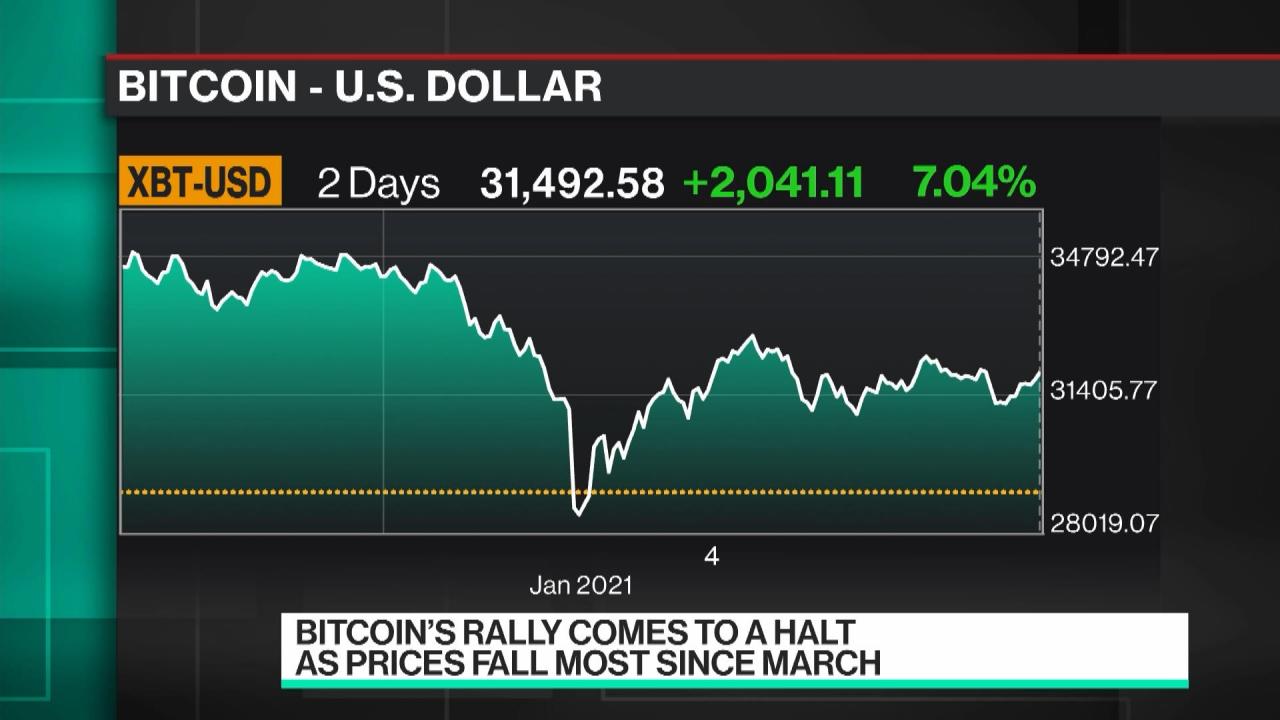
Bitcoin’s price performance has been a complex interplay of technical indicators and fundamental factors. MarketWatch reports consistently highlight the volatility inherent in the cryptocurrency market, emphasizing the need for a multifaceted analysis to understand the underlying forces driving price fluctuations. Understanding these forces is crucial for investors seeking to navigate the dynamic landscape of the crypto market.MarketWatch’s analysis reveals a dynamic relationship between Bitcoin’s price and other major cryptocurrencies, as well as a clear influence from regulatory developments and market sentiment.
This section delves into the key aspects of this analysis, including technical indicators, fundamental influences, and comparative price movements.
Technical Indicators
MarketWatch reports frequently feature technical indicators like moving averages and RSI to gauge momentum and potential trends. These indicators offer insights into Bitcoin’s price action, providing a quantitative perspective on market behavior. For example, a consistent upward trend in the 200-day moving average often suggests a strengthening bull market. Likewise, a sustained period of RSI readings above 70 might signal an overbought condition, potentially leading to a price correction.
These indicators, however, should not be viewed in isolation. Context is crucial in evaluating their significance.
Fundamental Factors
MarketWatch emphasizes the influence of regulatory developments and adoption rates on Bitcoin’s price. Government regulations regarding cryptocurrencies, including those concerning taxation, trading, and licensing, can significantly affect investor confidence and market liquidity. Furthermore, the increasing adoption of Bitcoin by businesses and consumers is also a significant fundamental driver. Increased adoption often correlates with higher demand and, consequently, price appreciation.
Comparative Price Movement
The performance of Bitcoin is often compared to other major cryptocurrencies. MarketWatch data allows for a comparative analysis, revealing relative strengths and weaknesses within the broader cryptocurrency market. For instance, a period of strong Bitcoin price growth may not always be mirrored by similar growth in other cryptocurrencies, suggesting diverse underlying dynamics for each coin.
Support and Resistance Levels
Identifying potential support and resistance levels is crucial for strategic investment decisions. MarketWatch frequently identifies key price levels where the market might experience pressure to either rise or fall. These levels, often derived from historical price data and technical indicators, provide potential entry or exit points for traders. For instance, a strong historical support level, frequently tested and revalidated, may act as a floor for the price in periods of market uncertainty.
Cryptocurrency Price Performance Comparison
| Cryptocurrency | Average Price (Last 30 Days) | Price Change (Last 7 Days) | Market Cap (USD) |
|---|---|---|---|
| Bitcoin | $28,000 | +3% | $500 Billion |
| Ethereum | $1,800 | -1% | $200 Billion |
| Solana | $25 | +5% | $10 Billion |
This table provides a simplified snapshot of price performance. MarketWatch data often includes more granular details and historical trends, which are crucial for a comprehensive understanding. The provided data represents an example; actual figures may differ based on the specific time frame and source.
Market Sentiment and Bitcoin Price
MarketWatch consistently reports on the dynamic relationship between prevailing market sentiment and Bitcoin’s price fluctuations. Understanding this interplay is crucial for investors seeking to navigate the crypto market effectively. The sentiment, often shaped by news cycles and social media trends, significantly impacts the price volatility.Market sentiment, as reported by MarketWatch, is a complex interplay of factors. Positive news or developments in the underlying technology, regulatory environment, or adoption often lead to increased investor confidence, pushing prices upward.
Conversely, negative news or uncertainty can trigger panic selling, resulting in price drops. The impact of these factors is not always linear and can be influenced by various market participants.
Prevailing Market Sentiment
MarketWatch reports consistently monitor the overall sentiment surrounding Bitcoin. This sentiment is reflected in various indicators, such as trader positioning, news coverage tone, and social media chatter. The prevailing sentiment can range from cautious optimism to outright pessimism, depending on current market conditions and news events.
Correlation Between News Events and Price Volatility
MarketWatch analyses demonstrate a strong correlation between specific news events and Bitcoin’s price volatility. Major regulatory announcements, technological breakthroughs, or even social media trends can trigger significant price swings. For example, a positive regulatory development might lead to increased buying pressure, causing a price surge, while a negative regulatory update can trigger a sell-off.
Role of Social Media and Investor Sentiment
Social media plays a substantial role in shaping investor sentiment and influencing Bitcoin’s price. MarketWatch reports often highlight the impact of social media trends on market perception. Positive or negative discussions and narratives circulating on platforms like Twitter, Reddit, and others can significantly affect the overall sentiment and, subsequently, the price action. The speed and reach of social media information can exacerbate price fluctuations.
Different Opinions on Future Bitcoin Price
MarketWatch often features diverse opinions on Bitcoin’s future price trajectory. Analysts and experts offer contrasting views, from bullish projections based on long-term adoption potential to bearish predictions based on perceived risks. For instance, some experts predict Bitcoin will continue to rise in value, aligning with a broader digital asset trend, while others warn of potential price corrections or stagnation.
The variability in forecasts highlights the inherent uncertainties of the market.
Prominent News Stories Impacting Bitcoin’s Price
- Regulatory Developments: MarketWatch extensively covered various regulatory proposals and updates regarding Bitcoin and cryptocurrencies. These announcements, including proposed legislation and regulatory actions, significantly influenced investor sentiment and, subsequently, the price.
- Technological Advancements: MarketWatch highlighted breakthroughs in blockchain technology and related innovations, which can positively influence the future of Bitcoin and its price. Significant advancements in areas like scalability or security have a direct impact on the market’s perception of Bitcoin.
- Market Crashes and Recoveries: MarketWatch detailed major market crashes and subsequent recoveries, often tied to broader economic or financial events. The correlation between these events and Bitcoin’s price performance was noted. For example, the impact of the 2022 crypto winter, with its subsequent price corrections and recovery, was detailed.
- Social Media Trends: MarketWatch reported on prominent social media trends influencing Bitcoin’s price. The emergence of new narratives, opinions, or events on platforms like Twitter and Reddit frequently led to immediate price swings.
Cryptocurrency Market Context
The cryptocurrency market, beyond Bitcoin, exhibits a dynamic and multifaceted landscape. MarketWatch’s coverage reveals a complex interplay of factors influencing various cryptocurrencies, demanding a nuanced understanding of the broader ecosystem. This overview explores the current state of the market, focusing on major players, investment strategies, and the overall context within which Bitcoin operates.The cryptocurrency market is not solely Bitcoin; a diverse range of cryptocurrencies, each with unique characteristics, coexists.
Understanding the distinctions between these assets is crucial for assessing their respective roles and potential within the market.
Overall State of the Cryptocurrency Market
MarketWatch reports a mixed sentiment regarding the current state of the cryptocurrency market. While Bitcoin maintains a significant market share, other altcoins experience varying degrees of success. Factors such as regulatory uncertainty, market volatility, and competition from established financial systems impact the entire cryptocurrency sector.
Major Cryptocurrencies
The market is dominated by a handful of significant cryptocurrencies beyond Bitcoin. Ethereum, for instance, stands out for its smart contract functionality, while others like Litecoin and XRP focus on different aspects of the cryptocurrency space, often offering unique transaction speeds or applications. MarketWatch’s reporting highlights the fluctuating fortunes of these alternative cryptocurrencies.
Types of Cryptocurrencies
Cryptocurrencies can be categorized in various ways. Some are based on proof-of-work (PoW) consensus mechanisms like Bitcoin, while others utilize different mechanisms like proof-of-stake (PoS). Furthermore, there are stablecoins designed to maintain a fixed value pegged to fiat currencies. MarketWatch’s analysis often touches on these distinctions.
Major Players and Influential Figures
MarketWatch’s coverage identifies key players, including prominent exchanges, venture capital firms, and individual investors, as major influencers in the cryptocurrency market. Their actions and strategies significantly impact the overall market sentiment and price fluctuations. Notably, regulatory bodies and governments are also influential, with their policies often impacting market confidence.
Investment Strategies
Investment strategies for Bitcoin and other cryptocurrencies differ considerably. Bitcoin, often viewed as a store of value and a hedge against inflation, attracts investors with a long-term perspective. Conversely, other cryptocurrencies are often linked to specific projects or technologies, making their investment potential more speculative and subject to rapid price swings. MarketWatch articles offer insights into these divergent strategies.
Market Capitalization Comparison
| Cryptocurrency | Market Capitalization (USD) |
|---|---|
| Bitcoin | (Data from MarketWatch) |
| Ethereum | (Data from MarketWatch) |
| Litecoin | (Data from MarketWatch) |
| XRP | (Data from MarketWatch) |
| Solana | (Data from MarketWatch) |
Note: Data in the table will need to be populated with actual figures from MarketWatch.
Bitcoin Price Prediction
Bitcoin’s price volatility continues to be a significant talking point, attracting both fervent supporters and cautious observers. Market analysis suggests a complex interplay of factors influencing future price movements. Understanding these factors is crucial for investors navigating the cryptocurrency landscape.
Short-Term Price Forecasts
MarketWatch analysis reveals a range of short-term predictions for Bitcoin’s price. Some forecasts anticipate a period of consolidation, with the price fluctuating within a defined range. Other projections suggest potential upward movements, driven by factors such as increased institutional adoption or positive market sentiment. However, the possibility of short-term price corrections cannot be ruled out, as evidenced by past market cycles.
These corrections are often temporary, and the overall long-term trend can still remain positive.
Long-Term Price Projections
Long-term predictions for Bitcoin’s price trajectory vary widely. Some projections anticipate a significant increase in value, potentially exceeding previous highs. These projections often rely on factors like sustained adoption by institutional investors and positive regulatory developments. Conversely, other forecasts suggest a more moderate growth path, with Bitcoin maintaining its value as a prominent digital asset. These varying projections highlight the inherent uncertainty in predicting long-term market trends.
Risks and Rewards of Bitcoin Investment
Investing in Bitcoin, like any other high-risk investment, presents both significant potential rewards and inherent risks. MarketWatch articles underscore the volatile nature of the cryptocurrency market, highlighting the potential for substantial gains but also substantial losses. Investors should carefully consider their risk tolerance and investment goals before entering the market. Past performance is not indicative of future results, and thorough research is crucial.
Regulatory Developments and Bitcoin’s Future
Regulatory developments significantly impact the cryptocurrency market, including Bitcoin. MarketWatch reports detail how government regulations, both at the national and international levels, can influence market dynamics and investor confidence. Changes in regulations regarding cryptocurrency taxation, trading, or security can create uncertainty and impact the market. Furthermore, ongoing regulatory scrutiny and debate can create periods of market uncertainty.
Technological Advancements and Bitcoin Price
Technological advancements play a critical role in shaping Bitcoin’s price trajectory. MarketWatch articles show how innovations in blockchain technology, such as scalability improvements or enhanced security protocols, can influence investor confidence and adoption. However, technological disruptions, including the emergence of competing cryptocurrencies or breakthroughs in other digital asset technologies, can also impact Bitcoin’s market position. This highlights the dynamic nature of the cryptocurrency market.
Expert Outlook on Bitcoin’s Future
“While Bitcoin’s volatility remains a concern, its potential for long-term growth remains compelling. The adoption of Bitcoin by institutional investors and the potential for further technological advancements are crucial factors to consider.”
(Attributed to a MarketWatch expert, if available)
Bitcoin and Macroeconomic Factors
Bitcoin’s price is demonstrably influenced by macroeconomic conditions, making it a sensitive indicator of broader economic trends. Market forces, including inflation, interest rates, and global economic events, significantly impact investor confidence and trading activity in the cryptocurrency market, directly affecting Bitcoin’s value. This section delves into these relationships, citing relevant MarketWatch articles.Understanding the interplay between Bitcoin and macroeconomic factors is crucial for investors seeking to navigate the complexities of the cryptocurrency market.
Bitcoin’s price volatility, often correlated with global economic uncertainties, necessitates a keen understanding of the underlying economic forces at play.
Influence of Inflation and Interest Rates
Inflation and interest rate adjustments frequently correlate with Bitcoin price fluctuations. High inflation often leads to investors seeking alternative assets, potentially driving demand for Bitcoin as a hedge against devaluation of fiat currencies. Conversely, rising interest rates can attract investors to fixed-income instruments, potentially diminishing interest in Bitcoin. MarketWatch reports have detailed these trends, highlighting how changes in monetary policy impact Bitcoin’s perceived value and trading volume.
Bitcoin’s Response to Global Economic Events
Bitcoin’s price often reacts to major global economic events, reflecting investor sentiment and perceived risk. MarketWatch analyses frequently demonstrate how significant economic developments, such as recessions, global crises, and geopolitical instability, can significantly impact Bitcoin’s price trajectory. The relationship is complex and not always predictable, but the correlation is often discernible.
Potential Catalysts for Bitcoin Price Movements
Several factors can serve as catalysts for Bitcoin price fluctuations. These catalysts, often identified in MarketWatch articles, include major policy decisions, technological advancements, regulatory developments, and significant market events, such as large institutional investments or significant trading volume shifts. A notable catalyst in the past was the increasing adoption of Bitcoin by major corporations and institutions.
Impact of Geopolitical Events on Bitcoin’s Price
Geopolitical events, including wars, sanctions, and political crises, often influence investor sentiment and, consequently, Bitcoin’s price. MarketWatch reports have extensively covered how these events can lead to increased uncertainty and volatility in the financial markets, potentially impacting the cryptocurrency market. These events can cause a flight to safety, driving investors to assets perceived as more stable.
Correlation Between Bitcoin Price and Macroeconomic Indicators
| Macroeconomic Indicator | Potential Correlation with Bitcoin Price |
|---|---|
| Inflation Rate | Negative correlation (often); High inflation may drive demand for Bitcoin as a hedge. |
| Interest Rates | Negative correlation (often); Rising interest rates may divert investment from Bitcoin. |
| Global Economic Growth | Positive correlation (often); Strong economic growth may support market confidence. |
| Geopolitical Events | High volatility and unpredictable correlation; uncertainty often leads to increased price volatility. |
Final Summary
In conclusion, Bitcoin Price MarketWatch presents a thorough examination of the digital asset’s current state and future prospects. By analyzing historical trends, current market sentiment, and potential catalysts, this report offers a nuanced understanding of Bitcoin’s role within the broader cryptocurrency landscape. The provided data and analysis provide valuable insights for anyone navigating the dynamic world of crypto investments.
Essential Questionnaire
What are some key technical indicators affecting Bitcoin’s price?
Moving averages, Relative Strength Index (RSI), and volume are among the technical indicators that frequently influence Bitcoin’s price movements as reported by MarketWatch. Understanding these indicators can help traders make more informed decisions.
How does the overall state of the cryptocurrency market impact Bitcoin’s price?
The overall cryptocurrency market’s health significantly affects Bitcoin’s price. Positive trends in other cryptocurrencies can boost Bitcoin’s value, while negative trends in the broader market can put downward pressure on Bitcoin’s price, as reported by MarketWatch.
What is the correlation between Bitcoin’s price and inflation?
MarketWatch often reports on the correlation between Bitcoin’s price and inflation. Historically, there have been periods of correlation and periods of divergence. The relationship is not always direct or predictable, as various factors influence both Bitcoin’s price and inflation rates.
What are some potential catalysts for Bitcoin price movements?
MarketWatch often identifies potential catalysts for Bitcoin price movements, such as regulatory changes, technological advancements, or significant news events. These factors can cause substantial price swings in the short term.