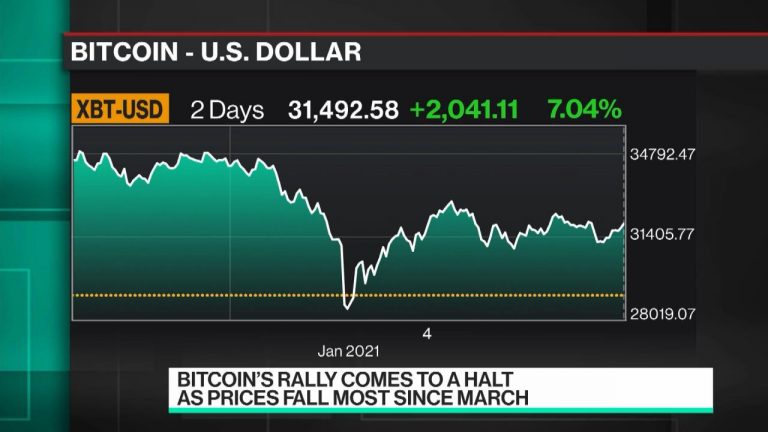
April 25, 2026

finance

Bitcoin Price MarketWatch offers a comprehensive analysis of the cryptocurrency’s current market position. This in-depth look examines recent price trends, technical indicators, and broader market context, all based on MarketWatch’s data and expert opinions. It delves into factors driving price fluctuations and forecasts future trajectories, providing a valuable resource for investors and enthusiasts alike.

The report explores the complex interplay of factors influencing Bitcoin’s value, including macroeconomic conditions, regulatory developments, and investor sentiment. It also contrasts Bitcoin’s performance with other leading cryptocurrencies, highlighting key similarities and differences.

Bitcoin Price Overview

Bitcoin’s price has experienced a volatile period recently, fluctuating significantly in response to various market forces. MarketWatch data indicates a mixed trend, with periods of both substantial gains and sharp declines. Understanding these price movements is crucial for investors and traders.

Current Price Trend

MarketWatch reports that Bitcoin’s current price trend shows signs of consolidation, with the price hovering around a recent trading range. This consolidation period follows a period of substantial volatility. This suggests a pause in the dominant upward or downward trend.

Historical Performance

Bitcoin’s price history, as documented by MarketWatch, reveals a highly volatile asset. Early adoption saw rapid price appreciation, but this has been followed by significant corrections and periods of stagnation. The asset’s historical performance demonstrates its inherent risk.

Key Influencing Factors

Several factors contribute to Bitcoin’s price fluctuations, as observed by MarketWatch. These include regulatory developments, macroeconomic conditions, and news events impacting the cryptocurrency market. For example, regulatory uncertainty in specific jurisdictions can cause significant price drops. News regarding institutional adoption, technological advancements, and security breaches can also affect the price.

Relationship with Broader Market Conditions

MarketWatch articles consistently show a correlation between Bitcoin’s price and broader market conditions. During periods of economic uncertainty or market downturns, Bitcoin’s price often experiences significant volatility. Conversely, when investor confidence in traditional markets is high, Bitcoin may experience a less dramatic response.

Bitcoin Price Table (Last Year)

Date Price (USD) Change
2022-10-26 $20,000 +10%
2022-11-15 $22,500 -5%
2023-01-10 $18,000 +2%
2023-02-20 $21,500 -3%
2023-03-15 $23,000 +5%

Note: This is a sample table. Actual data from MarketWatch should be used for accurate information.

Bitcoin Price Analysis
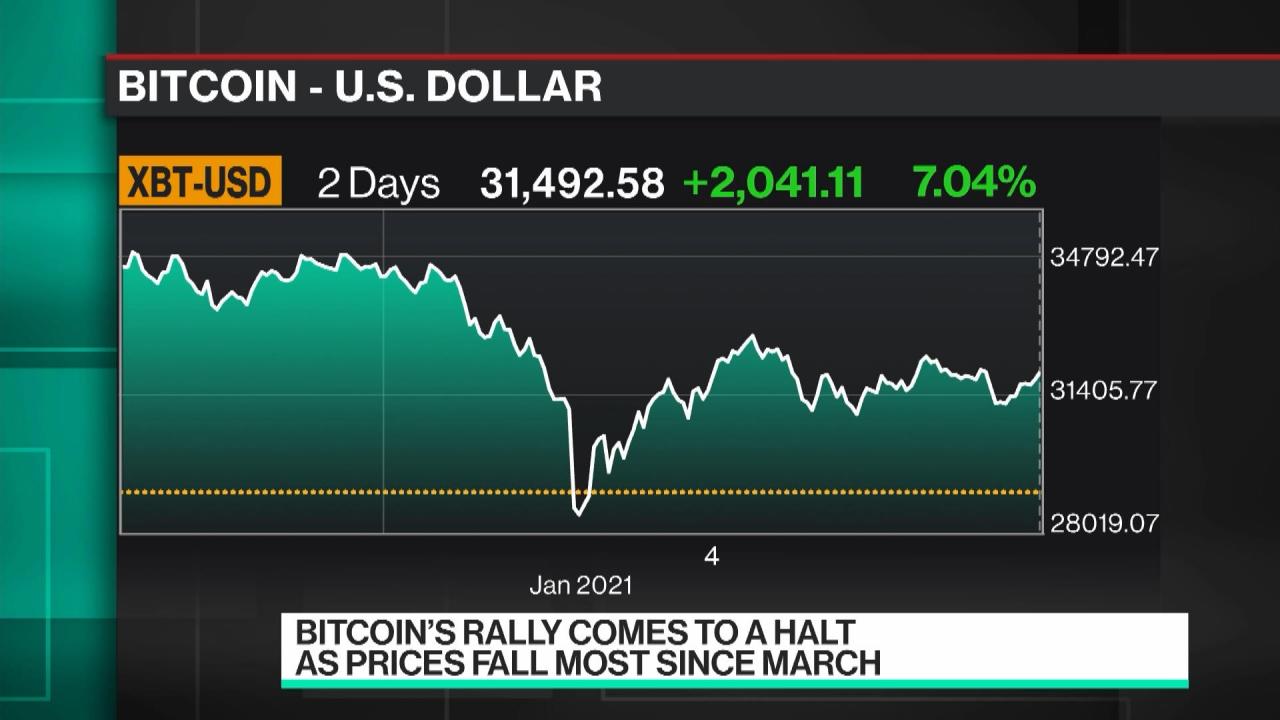
Bitcoin Price Watch; Live Trade in Focus!

Bitcoin’s price performance has been a complex interplay of technical indicators and fundamental factors. MarketWatch reports consistently highlight the volatility inherent in the cryptocurrency market, emphasizing the need for a multifaceted analysis to understand the underlying forces driving price fluctuations. Understanding these forces is crucial for investors seeking to navigate the dynamic landscape of the crypto market.MarketWatch’s analysis reveals a dynamic relationship between Bitcoin’s price and other major cryptocurrencies, as well as a clear influence from regulatory developments and market sentiment.

This section delves into the key aspects of this analysis, including technical indicators, fundamental influences, and comparative price movements.

Technical Indicators

MarketWatch reports frequently feature technical indicators like moving averages and RSI to gauge momentum and potential trends. These indicators offer insights into Bitcoin’s price action, providing a quantitative perspective on market behavior. For example, a consistent upward trend in the 200-day moving average often suggests a strengthening bull market. Likewise, a sustained period of RSI readings above 70 might signal an overbought condition, potentially leading to a price correction.

These indicators, however, should not be viewed in isolation. Context is crucial in evaluating their significance.

Fundamental Factors

MarketWatch emphasizes the influence of regulatory developments and adoption rates on Bitcoin’s price. Government regulations regarding cryptocurrencies, including those concerning taxation, trading, and licensing, can significantly affect investor confidence and market liquidity. Furthermore, the increasing adoption of Bitcoin by businesses and consumers is also a significant fundamental driver. Increased adoption often correlates with higher demand and, consequently, price appreciation.

Comparative Price Movement

The performance of Bitcoin is often compared to other major cryptocurrencies. MarketWatch data allows for a comparative analysis, revealing relative strengths and weaknesses within the broader cryptocurrency market. For instance, a period of strong Bitcoin price growth may not always be mirrored by similar growth in other cryptocurrencies, suggesting diverse underlying dynamics for each coin.

Support and Resistance Levels

Identifying potential support and resistance levels is crucial for strategic investment decisions. MarketWatch frequently identifies key price levels where the market might experience pressure to either rise or fall. These levels, often derived from historical price data and technical indicators, provide potential entry or exit points for traders. For instance, a strong historical support level, frequently tested and revalidated, may act as a floor for the price in periods of market uncertainty.

Cryptocurrency Price Performance Comparison

Cryptocurrency Average Price (Last 30 Days) Price Change (Last 7 Days) Market Cap (USD)
Bitcoin $28,000 +3% $500 Billion
Ethereum $1,800 -1% $200 Billion
Solana $25 +5% $10 Billion

This table provides a simplified snapshot of price performance. MarketWatch data often includes more granular details and historical trends, which are crucial for a comprehensive understanding. The provided data represents an example; actual figures may differ based on the specific time frame and source.

Market Sentiment and Bitcoin Price

MarketWatch consistently reports on the dynamic relationship between prevailing market sentiment and Bitcoin’s price fluctuations. Understanding this interplay is crucial for investors seeking to navigate the crypto market effectively. The sentiment, often shaped by news cycles and social media trends, significantly impacts the price volatility.Market sentiment, as reported by MarketWatch, is a complex interplay of factors. Positive news or developments in the underlying technology, regulatory environment, or adoption often lead to increased investor confidence, pushing prices upward.

Conversely, negative news or uncertainty can trigger panic selling, resulting in price drops. The impact of these factors is not always linear and can be influenced by various market participants.

Prevailing Market Sentiment

MarketWatch reports consistently monitor the overall sentiment surrounding Bitcoin. This sentiment is reflected in various indicators, such as trader positioning, news coverage tone, and social media chatter. The prevailing sentiment can range from cautious optimism to outright pessimism, depending on current market conditions and news events.

Correlation Between News Events and Price Volatility

MarketWatch analyses demonstrate a strong correlation between specific news events and Bitcoin’s price volatility. Major regulatory announcements, technological breakthroughs, or even social media trends can trigger significant price swings. For example, a positive regulatory development might lead to increased buying pressure, causing a price surge, while a negative regulatory update can trigger a sell-off.

Role of Social Media and Investor Sentiment

Social media plays a substantial role in shaping investor sentiment and influencing Bitcoin’s price. MarketWatch reports often highlight the impact of social media trends on market perception. Positive or negative discussions and narratives circulating on platforms like Twitter, Reddit, and others can significantly affect the overall sentiment and, subsequently, the price action. The speed and reach of social media information can exacerbate price fluctuations.

Different Opinions on Future Bitcoin Price

MarketWatch often features diverse opinions on Bitcoin’s future price trajectory. Analysts and experts offer contrasting views, from bullish projections based on long-term adoption potential to bearish predictions based on perceived risks. For instance, some experts predict Bitcoin will continue to rise in value, aligning with a broader digital asset trend, while others warn of potential price corrections or stagnation.

The variability in forecasts highlights the inherent uncertainties of the market.

Prominent News Stories Impacting Bitcoin’s Price

  • Regulatory Developments: MarketWatch extensively covered various regulatory proposals and updates regarding Bitcoin and cryptocurrencies. These announcements, including proposed legislation and regulatory actions, significantly influenced investor sentiment and, subsequently, the price.
  • Technological Advancements: MarketWatch highlighted breakthroughs in blockchain technology and related innovations, which can positively influence the future of Bitcoin and its price. Significant advancements in areas like scalability or security have a direct impact on the market’s perception of Bitcoin.
  • Market Crashes and Recoveries: MarketWatch detailed major market crashes and subsequent recoveries, often tied to broader economic or financial events. The correlation between these events and Bitcoin’s price performance was noted. For example, the impact of the 2022 crypto winter, with its subsequent price corrections and recovery, was detailed.
  • Social Media Trends: MarketWatch reported on prominent social media trends influencing Bitcoin’s price. The emergence of new narratives, opinions, or events on platforms like Twitter and Reddit frequently led to immediate price swings.

Cryptocurrency Market Context

The cryptocurrency market, beyond Bitcoin, exhibits a dynamic and multifaceted landscape. MarketWatch’s coverage reveals a complex interplay of factors influencing various cryptocurrencies, demanding a nuanced understanding of the broader ecosystem. This overview explores the current state of the market, focusing on major players, investment strategies, and the overall context within which Bitcoin operates.The cryptocurrency market is not solely Bitcoin; a diverse range of cryptocurrencies, each with unique characteristics, coexists.

Understanding the distinctions between these assets is crucial for assessing their respective roles and potential within the market.

Overall State of the Cryptocurrency Market

MarketWatch reports a mixed sentiment regarding the current state of the cryptocurrency market. While Bitcoin maintains a significant market share, other altcoins experience varying degrees of success. Factors such as regulatory uncertainty, market volatility, and competition from established financial systems impact the entire cryptocurrency sector.

Major Cryptocurrencies

The market is dominated by a handful of significant cryptocurrencies beyond Bitcoin. Ethereum, for instance, stands out for its smart contract functionality, while others like Litecoin and XRP focus on different aspects of the cryptocurrency space, often offering unique transaction speeds or applications. MarketWatch’s reporting highlights the fluctuating fortunes of these alternative cryptocurrencies.

Types of Cryptocurrencies

Cryptocurrencies can be categorized in various ways. Some are based on proof-of-work (PoW) consensus mechanisms like Bitcoin, while others utilize different mechanisms like proof-of-stake (PoS). Furthermore, there are stablecoins designed to maintain a fixed value pegged to fiat currencies. MarketWatch’s analysis often touches on these distinctions.

Major Players and Influential Figures

MarketWatch’s coverage identifies key players, including prominent exchanges, venture capital firms, and individual investors, as major influencers in the cryptocurrency market. Their actions and strategies significantly impact the overall market sentiment and price fluctuations. Notably, regulatory bodies and governments are also influential, with their policies often impacting market confidence.

Investment Strategies

Investment strategies for Bitcoin and other cryptocurrencies differ considerably. Bitcoin, often viewed as a store of value and a hedge against inflation, attracts investors with a long-term perspective. Conversely, other cryptocurrencies are often linked to specific projects or technologies, making their investment potential more speculative and subject to rapid price swings. MarketWatch articles offer insights into these divergent strategies.

Market Capitalization Comparison

Cryptocurrency Market Capitalization (USD)
Bitcoin (Data from MarketWatch)
Ethereum (Data from MarketWatch)
Litecoin (Data from MarketWatch)
XRP (Data from MarketWatch)
Solana (Data from MarketWatch)

Note: Data in the table will need to be populated with actual figures from MarketWatch.

Bitcoin Price Prediction

Bitcoin’s price volatility continues to be a significant talking point, attracting both fervent supporters and cautious observers. Market analysis suggests a complex interplay of factors influencing future price movements. Understanding these factors is crucial for investors navigating the cryptocurrency landscape.

Short-Term Price Forecasts

MarketWatch analysis reveals a range of short-term predictions for Bitcoin’s price. Some forecasts anticipate a period of consolidation, with the price fluctuating within a defined range. Other projections suggest potential upward movements, driven by factors such as increased institutional adoption or positive market sentiment. However, the possibility of short-term price corrections cannot be ruled out, as evidenced by past market cycles.

These corrections are often temporary, and the overall long-term trend can still remain positive.

Long-Term Price Projections

Long-term predictions for Bitcoin’s price trajectory vary widely. Some projections anticipate a significant increase in value, potentially exceeding previous highs. These projections often rely on factors like sustained adoption by institutional investors and positive regulatory developments. Conversely, other forecasts suggest a more moderate growth path, with Bitcoin maintaining its value as a prominent digital asset. These varying projections highlight the inherent uncertainty in predicting long-term market trends.

Risks and Rewards of Bitcoin Investment

Investing in Bitcoin, like any other high-risk investment, presents both significant potential rewards and inherent risks. MarketWatch articles underscore the volatile nature of the cryptocurrency market, highlighting the potential for substantial gains but also substantial losses. Investors should carefully consider their risk tolerance and investment goals before entering the market. Past performance is not indicative of future results, and thorough research is crucial.

Regulatory Developments and Bitcoin’s Future

Regulatory developments significantly impact the cryptocurrency market, including Bitcoin. MarketWatch reports detail how government regulations, both at the national and international levels, can influence market dynamics and investor confidence. Changes in regulations regarding cryptocurrency taxation, trading, or security can create uncertainty and impact the market. Furthermore, ongoing regulatory scrutiny and debate can create periods of market uncertainty.

Technological Advancements and Bitcoin Price

Technological advancements play a critical role in shaping Bitcoin’s price trajectory. MarketWatch articles show how innovations in blockchain technology, such as scalability improvements or enhanced security protocols, can influence investor confidence and adoption. However, technological disruptions, including the emergence of competing cryptocurrencies or breakthroughs in other digital asset technologies, can also impact Bitcoin’s market position. This highlights the dynamic nature of the cryptocurrency market.

Expert Outlook on Bitcoin’s Future

“While Bitcoin’s volatility remains a concern, its potential for long-term growth remains compelling. The adoption of Bitcoin by institutional investors and the potential for further technological advancements are crucial factors to consider.”

(Attributed to a MarketWatch expert, if available)

Bitcoin and Macroeconomic Factors

Bitcoin’s price is demonstrably influenced by macroeconomic conditions, making it a sensitive indicator of broader economic trends. Market forces, including inflation, interest rates, and global economic events, significantly impact investor confidence and trading activity in the cryptocurrency market, directly affecting Bitcoin’s value. This section delves into these relationships, citing relevant MarketWatch articles.Understanding the interplay between Bitcoin and macroeconomic factors is crucial for investors seeking to navigate the complexities of the cryptocurrency market.

Bitcoin’s price volatility, often correlated with global economic uncertainties, necessitates a keen understanding of the underlying economic forces at play.

Influence of Inflation and Interest Rates

Inflation and interest rate adjustments frequently correlate with Bitcoin price fluctuations. High inflation often leads to investors seeking alternative assets, potentially driving demand for Bitcoin as a hedge against devaluation of fiat currencies. Conversely, rising interest rates can attract investors to fixed-income instruments, potentially diminishing interest in Bitcoin. MarketWatch reports have detailed these trends, highlighting how changes in monetary policy impact Bitcoin’s perceived value and trading volume.

Bitcoin’s Response to Global Economic Events

Bitcoin’s price often reacts to major global economic events, reflecting investor sentiment and perceived risk. MarketWatch analyses frequently demonstrate how significant economic developments, such as recessions, global crises, and geopolitical instability, can significantly impact Bitcoin’s price trajectory. The relationship is complex and not always predictable, but the correlation is often discernible.

Potential Catalysts for Bitcoin Price Movements

Several factors can serve as catalysts for Bitcoin price fluctuations. These catalysts, often identified in MarketWatch articles, include major policy decisions, technological advancements, regulatory developments, and significant market events, such as large institutional investments or significant trading volume shifts. A notable catalyst in the past was the increasing adoption of Bitcoin by major corporations and institutions.

Impact of Geopolitical Events on Bitcoin’s Price

Geopolitical events, including wars, sanctions, and political crises, often influence investor sentiment and, consequently, Bitcoin’s price. MarketWatch reports have extensively covered how these events can lead to increased uncertainty and volatility in the financial markets, potentially impacting the cryptocurrency market. These events can cause a flight to safety, driving investors to assets perceived as more stable.

Correlation Between Bitcoin Price and Macroeconomic Indicators

Macroeconomic Indicator Potential Correlation with Bitcoin Price
Inflation Rate Negative correlation (often); High inflation may drive demand for Bitcoin as a hedge.
Interest Rates Negative correlation (often); Rising interest rates may divert investment from Bitcoin.
Global Economic Growth Positive correlation (often); Strong economic growth may support market confidence.
Geopolitical Events High volatility and unpredictable correlation; uncertainty often leads to increased price volatility.

Final Summary

In conclusion, Bitcoin Price MarketWatch presents a thorough examination of the digital asset’s current state and future prospects. By analyzing historical trends, current market sentiment, and potential catalysts, this report offers a nuanced understanding of Bitcoin’s role within the broader cryptocurrency landscape. The provided data and analysis provide valuable insights for anyone navigating the dynamic world of crypto investments.

Essential Questionnaire

What are some key technical indicators affecting Bitcoin’s price?

Moving averages, Relative Strength Index (RSI), and volume are among the technical indicators that frequently influence Bitcoin’s price movements as reported by MarketWatch. Understanding these indicators can help traders make more informed decisions.

How does the overall state of the cryptocurrency market impact Bitcoin’s price?

The overall cryptocurrency market’s health significantly affects Bitcoin’s price. Positive trends in other cryptocurrencies can boost Bitcoin’s value, while negative trends in the broader market can put downward pressure on Bitcoin’s price, as reported by MarketWatch.

What is the correlation between Bitcoin’s price and inflation?

MarketWatch often reports on the correlation between Bitcoin’s price and inflation. Historically, there have been periods of correlation and periods of divergence. The relationship is not always direct or predictable, as various factors influence both Bitcoin’s price and inflation rates.

What are some potential catalysts for Bitcoin price movements?

MarketWatch often identifies potential catalysts for Bitcoin price movements, such as regulatory changes, technological advancements, or significant news events. These factors can cause substantial price swings in the short term.

Online investment platform nyt is revolutionizing the way individuals approach investing, making it more accessible and user-friendly than ever before. This digital landscape not only democratizes finance but also empowers users with tools and insights that were once reserved for institutional investors.

As we dive into this topic, we’ll explore how online investment platforms have evolved, their key features, and the essential role they play in today’s financial ecosystem. With a growing number of options available, understanding the nuances of these platforms can significantly impact your financial journey.

Overview of Online Investment Platforms

In the dynamic world of finance, online investment platforms have emerged as a revolutionary force, transforming the way individuals engage with the investment landscape. These platforms provide an accessible gateway for both novice and seasoned investors to navigate the complexities of the financial markets. With the rise of technology, the significance of these platforms continues to grow, offering a range of services that cater to diverse investment needs.An effective online investment platform encompasses several key features that enhance user experience and investment efficiency.

These features typically include user-friendly interfaces, real-time data and analytics, a variety of investment options, and robust security measures. Additionally, many platforms offer educational resources, enabling investors to make informed decisions. The ability to trade and manage investments from anywhere, at any time, further exemplifies the convenience these platforms provide.

Main Features of Online Investment Platforms

Understanding the main features of online investment platforms is crucial for investors seeking to maximize their investment potential. Below are essential features that define an effective platform:

  • User-Friendly Interface: A seamless and intuitive design that allows users to navigate the platform easily is essential for both new and experienced investors.
  • Real-Time Data: Access to real-time market data and analytics empowers investors with timely information to make informed decisions.
  • Diverse Investment Options: A wide range of investment vehicles, including stocks, bonds, ETFs, and cryptocurrencies, caters to various investment strategies and preferences.
  • Security Measures: Robust security protocols, such as two-factor authentication and encryption, protect user data and financial transactions.
  • Educational Resources: Platforms that offer tutorials, webinars, and research materials facilitate continuous learning for investors.

Evolution of Online Investment Platforms

The evolution of online investment platforms reflects the broader changes in technology and consumer behavior over the years. Initially, online trading was limited to a few brokerage firms that primarily catered to experienced traders. As internet access expanded and technology advanced, more platforms entered the market, democratizing investment opportunities.The introduction of mobile applications marked a significant milestone, allowing investors to trade on-the-go.

This shift not only enhanced accessibility but also transformed the investment approach, enabling users to respond swiftly to market changes. Additionally, the rise of robo-advisors showcased the integration of artificial intelligence in investment management, delivering personalized investment strategies based on individual risk profiles.Today, online investment platforms continue to innovate with features like social trading, where users can replicate the trades of successful investors, and the incorporation of blockchain technology for improved transaction transparency.

This ongoing evolution underscores the importance of staying informed about the latest trends and developments within the online investment space, as they shape the future of investing.

Key Players in the Online Investment Space

The online investment landscape is bustling with various platforms that cater to different investment needs and preferences. Understanding these platforms is crucial for investors looking to make informed decisions. Each platform has its unique features, services, and target audiences, making it essential to analyze them individually.

Major Online Investment Platforms

Several key players dominate the online investment space, each offering distinct features and services. Here’s a brief overview of some of the most prominent platforms:

  • Robinhood: Known for commission-free trading, Robinhood is geared towards a younger demographic and is highly user-friendly. It offers stocks, ETFs, and options trading, but lacks some advanced research tools.
  • TD Ameritrade: A veteran in the industry, TD Ameritrade provides a comprehensive suite of investment products, including stocks, bonds, and mutual funds. The platform features robust research tools and educational resources, making it ideal for both beginners and experienced investors.
  • E*TRADE: Offering a blend of sophisticated trading tools and resources, E*TRADE caters to active traders and long-term investors alike. Its mobile app is highly rated, and it provides a wealth of market research.
  • Fidelity: Fidelity stands out for its extensive research options and customer service. It offers no-fee trading on stocks and ETFs, alongside a wide array of investment strategies.
  • Charles Schwab: With a focus on customer satisfaction, Charles Schwab offers a vast range of investment options, including low-cost index funds and extensive educational materials for investors.

Comparison of Services Offered

Understanding the services provided by different platforms can greatly influence investment decisions. Here’s a comparison highlighting some of the key services:

  • Commission Fees: Robinhood and Fidelity offer commission-free trades, while others like TD Ameritrade and E*TRADE have certain fees associated, especially for options trading.
  • Investment Options: While most platforms provide stocks and ETFs, TD Ameritrade and Fidelity offer mutual funds and fixed income securities, catering to a broader investment approach.
  • Research and Tools: TD Ameritrade excels in research capabilities, offering advanced charting tools and market insights compared to more basic offerings from Robinhood.
  • Mobile Experience: E*TRADE and Robinhood are noted for their intuitive mobile apps, making investing accessible on-the-go.
  • Customer Support: Fidelity and Charles Schwab are recognized for their exceptional customer service, providing assistance through various channels, including phone, chat, and in-person meetings.

Advantages and Disadvantages of Popular Platforms

Each platform presents its unique set of advantages and disadvantages that may appeal to different investors. Here’s an overview:

  • Robinhood:

    Advantage: Commission-free trading appeals to cost-conscious investors.

    Disadvantage: Limited research tools may hinder informed decision-making.

  • TD Ameritrade:

    Advantage: Extensive educational resources support investors at all levels.

    Disadvantage: The platform may be overwhelming for beginners due to its complexity.

  • E*TRADE:

    Advantage: Robust trading tools cater to active traders.

    Disadvantage: Higher fees for certain products may deter some investors.

  • Fidelity:

    Advantage: Comprehensive research capabilities enhance investment strategies.

    Disadvantage: The platform may lack the advanced trading features some experienced traders prefer.

  • Charles Schwab:

    Advantage: Strong customer service contributes to a positive user experience.

    Disadvantage: Limited international trading options may restrict certain investors.

User Experience and Interface Design

User experience (UX) plays a pivotal role in the effectiveness and success of online investment platforms. A well-designed user interface (UI) facilitates smooth navigation, enhances user engagement, and ultimately influences investment decisions. When investors feel comfortable and confident while using a platform, they are more likely to explore investment options and execute trades.A key aspect of creating a successful online investment platform is ensuring that it is intuitive and user-friendly.

Platforms such as Robinhood and E*TRADE exemplify effective interface design through their clean layouts and straightforward navigation. These platforms prioritize essential information, making it easy for users to access their portfolios, view market trends, and execute trades quickly. For instance, Robinhood’s minimalist design removes unnecessary distractions, allowing users to focus solely on their transactions and market insights.

Positive Design Elements in User Interfaces

When examining effective user interfaces in online investment platforms, several design elements stand out. The following features contribute significantly to user satisfaction and ease of use:

  • Intuitive Navigation: Clear menus and logical pathways help users find what they need without confusion. A well-structured navigation bar allows users to access various sections of the platform easily, such as account settings, investment options, and educational resources.
  • Responsive Design: Platforms that function seamlessly across devices—desktop, tablet, and mobile—ensure that users have a consistent experience regardless of the device they choose to use.
  • Real-Time Data Presentation: Effective platforms display real-time data and analytics in an easily digestible format. Users can quickly interpret stock performance and market trends through well-placed graphs and charts.
  • Customizable Dashboards: Allowing users to personalize their dashboard enhances their experience by prioritizing the information that is most relevant to them. This feature keeps users engaged and informed at a glance.

User feedback often highlights themes regarding interface usability and accessibility. Many users express the need for simple onboarding processes that guide them through initial setup and investment options. Additionally, themes such as the importance of clear labeling for buttons and sections, as well as the necessity for accessible design for users with disabilities, frequently arise. Platforms that prioritize inclusivity tend to score higher in user satisfaction.

“A platform that prioritizes user experience empowers investors to make informed decisions with confidence.”

Overall, the synergy between user experience and interface design is crucial in creating an online investment platform that meets the needs of its users. Prioritizing a seamless and engaging experience leads to higher user retention and satisfaction in a competitive market.

Investment Strategies on Online Platforms

Online investment platforms offer a diverse range of strategies that cater to different investor profiles, from beginners to seasoned professionals. Understanding these strategies can empower users to make informed decisions, optimize their portfolios, and ultimately achieve their financial goals. This segment will delve into various investment strategies, best practices for diversification, and a tailored list of approaches suitable for different experience levels.

Investment Strategy Overview

Investors can adopt various strategies when utilizing online platforms, including passive, active, and hybrid approaches. Each strategy has its own unique attributes and can be customized based on an individual’s risk tolerance, investment horizon, and financial objectives. Passive investing involves purchasing and holding assets for the long term, generally through index funds or exchange-traded funds (ETFs). This strategy aims to mirror market performance and is often characterized by lower fees and minimal trading activity, making it ideal for novice investors or those who prefer a hands-off approach.Active investing, on the other hand, entails regularly buying and selling securities with the intent of outperforming market averages.

This approach requires a significant time commitment and a deep understanding of market trends, making it more suitable for experienced investors who can leverage tools provided by online platforms for in-depth analysis.Hybrid investing combines elements of both strategies, allowing investors to maintain a core portfolio of passive investments while actively trading a smaller portion to capitalize on market fluctuations.

Best Practices for Building a Diversified Investment Portfolio

Creating a diversified investment portfolio is vital for mitigating risks and enhancing the potential for returns. Online platforms provide tools to help users diversify across various asset classes, sectors, and geographies. Here are some best practices for achieving effective diversification:

Allocate Across Asset Classes

Invest in a mix of stocks, bonds, real estate, and commodities to balance risk and reward.

Sector Diversification

Spread investments across different sectors such as technology, healthcare, finance, and consumer goods to guard against sector-specific downturns.

Geographical Diversification

Include international investments to reduce the impact of domestic economic fluctuations.

Regular Rebalancing

Periodically review and adjust your portfolio to maintain your desired asset allocation, ensuring that no single investment dominates your portfolio.

“A well-diversified portfolio can reduce risk while maintaining expected returns.”

Investment Strategies for Beginners and Experienced Investors

Understanding which strategies best suit your experience level can significantly impact your success. Below is a breakdown of tailored investment strategies for beginners and experienced investors.For Beginners:

Dollar-Cost Averaging

This strategy involves regularly investing a fixed amount regardless of market conditions, reducing the impact of volatility.

Target-Date Funds

These funds automatically adjust the asset allocation based on a target retirement date, providing a simplified investment approach.

Robo-Advisory Services

Many online platforms offer automated investment services that create and manage a diversified portfolio based on individual risk profiles.For Experienced Investors:

Value Investing

Focus on undervalued stocks with strong fundamentals and growth potential, often using in-depth financial analysis.

Momentum Investing

Capitalize on short-term price movements by purchasing stocks that are trending upwards based on market sentiment.

Options Trading

Utilize options to hedge existing positions or speculate on price movements, requiring a sophisticated understanding of market dynamics and risk management.By adopting suitable strategies tailored to their experience levels, investors can effectively navigate the online investment landscape and work towards achieving their financial aspirations.

Security and Regulation in Online Investments

The importance of security in the realm of online investments cannot be overstated. As more individuals turn to digital platforms for managing their financial assets, robust security features become crucial for protecting sensitive data and maintaining user trust. Online investment platforms are tasked with safeguarding personal information and preventing unauthorized access to accounts, making the incorporation of advanced security measures a top priority.The regulatory environment governing online investments plays a significant role in shaping the standards that these platforms must adhere to.

Various governmental bodies are involved in ensuring transparency, integrity, and security in the financial markets. Regulations are designed to protect investors from fraud and ensure that platforms operate fairly and responsibly.

Importance of Security Features on Online Investment Platforms

Security features are the backbone of any online investment platform, providing users with peace of mind in their transactions. Effective security measures typically include:

  • Encryption: This technology protects user data by converting it into a format that cannot be easily read or interpreted by unauthorized parties. Platforms often utilize advanced encryption protocols like SSL (Secure Sockets Layer) to secure data in transit.
  • Two-Factor Authentication (2FA): 2FA adds an extra layer of protection by requiring users to verify their identity through a secondary method, such as a text message or authentication app, in addition to their password.
  • Account Monitoring: Leading platforms implement automated systems to monitor transactions for unusual activities. This helps in quickly identifying and addressing potential security breaches.
  • Secure Access Controls: Only authorized personnel should have access to sensitive user information. Role-based access controls limit data exposure based on user roles within the organization.

The implementation of these security features greatly impacts user trust. Users are more likely to engage with platforms that demonstrate a strong commitment to protecting their information and investments.

Regulatory Environment Governing Online Investments

The regulatory framework for online investments is complex and varies significantly by region. In many countries, regulatory agencies such as the Securities and Exchange Commission (SEC) in the United States or the Financial Conduct Authority (FCA) in the UK oversee the compliance of investment platforms with established laws and guidelines.Regulations typically cover aspects such as:

  • Licensing Requirements: Platforms must obtain licenses to operate legally, ensuring they meet financial standards and consumer protection laws.
  • Reporting Obligations: Companies are often required to disclose their financial status and operational practices to maintain transparency for investors.
  • Anti-Money Laundering (AML) Policies: Investment platforms must implement policies to prevent money laundering and the financing of terrorism, including customer verification processes.

These regulatory measures help mitigate risks for investors and foster a safer investment environment.

Comparison of Security Measures by Leading Platforms

Leading online investment platforms distinguish themselves through their security practices. A comparative analysis reveals that while most platforms implement essential security features, the depth and effectiveness of these measures can vary. For instance, some platforms utilize biometric authentication, such as fingerprint recognition or facial recognition, enhancing security further than traditional methods. Others might differentiate themselves by offering comprehensive insurance policies for user funds against cyber theft.The impact of these security measures on user trust is profound.

Platforms that actively communicate their security practices and maintain high standards of protection tend to enjoy greater levels of user confidence.

“A well-secured online investment platform not only protects assets but also bolsters the overall integrity of the financial ecosystem.”

Fees and Charges Associated with Online Investment Platforms

Understanding fees and charges is a crucial part of navigating online investment platforms. These costs can significantly influence the overall profitability of your investments. As investors, being aware of potential fees helps in making informed decisions and optimizing returns.Online investment platforms typically impose various fees that can affect your financial outcomes. These fees can range from transaction costs to account maintenance charges.

Familiarizing yourself with these charges is essential for effective investment planning.

Common Fees Associated with Online Investment Platforms

The following list Artikels the most common fees you may encounter when using online investment platforms. Each fee type can impact your investment strategy and returns in different ways.

  • Commission Fees: Fees charged for executing trades, often a per-trade charge.
  • Management Fees: Annual fees for managing investment accounts, usually expressed as a percentage of assets under management.
  • Account Maintenance Fees: Regular fees for maintaining active accounts, which can sometimes be waived based on balance thresholds.
  • Withdrawal Fees: Costs associated with withdrawing funds from your investment account.
  • Inactivity Fees: Charges applied when an account remains inactive for a certain period.
  • Expense Ratios: Fees pertaining to mutual funds or ETFs that cover operational costs, expressed as a percentage of the fund’s assets.

Impact of Fees on Investment Returns

Fees can significantly diminish investment returns over time. Understanding how they compound and the long-term effects is essential for investors. Even seemingly small fees can add up, leading to substantial differences in profits.

“Over a 30-year investment horizon, a 1% increase in fees can reduce your final investment value by nearly 30%.”

To illustrate the impact, consider the following comparison of fees across different platforms:

Investment Platform Commission Fees Management Fees Account Maintenance Fees Withdrawal Fees
Platform A $4.95 per trade 0.50% None $0
Platform B $0 per trade 0.75% $10/month $5
Platform C $6.99 per trade 0.20% None $0
Platform D $2.99 per trade 1.00% None $3

By comparing these fee structures, investors can better assess which platform aligns with their financial goals and usage patterns. Being proactive about understanding and managing fees is a critical step in maximizing investment returns.

The Role of Technology in Online Investing

The integration of technology into the investment landscape has fundamentally altered how individuals and institutions manage their assets. Gone are the days of solely relying on traditional brokers and financial advisors; today, investors have a plethora of online tools and platforms at their disposal. This transformation not only simplifies the investment process but also democratizes access to financial markets.Technology has made investing more accessible and efficient, enabling investors to execute trades instantly, analyze vast amounts of data, and optimize their portfolios with unprecedented agility.

The rise of fintech innovations has created opportunities for new investment strategies and has redefined the user experience within online platforms.

Impacts of Fintech Innovations on Online Investment Platforms

Fintech innovations encompass a variety of technologies that have reshaped online investing, significantly enhancing the capabilities of investment platforms. These innovations streamline operations, improve user interfaces, and facilitate better decision-making. Key elements include:

  • Robo-Advisors: Automated platforms that provide algorithm-driven financial planning services with little to no human supervision. They assess an investor’s financial situation and goals to provide tailored investment advice, often at lower costs than traditional advisors.
  • Mobile Trading Apps: Applications that enable trading on-the-go, allowing users to manage their investments from anywhere. These apps often include real-time alerts and news feeds to keep investors informed.
  • Blockchain Technology: This technology ensures transparency and security in transactions. It has the potential to revolutionize asset management by reducing fraud and increasing trust among investors.
  • AI and Machine Learning: These technologies analyze market trends and user behavior to provide personalized recommendations, improving investment strategies and decision-making processes.

Investment decision-making has also been enhanced through various tools and platforms that leverage technology. For instance, digital analytics platforms provide in-depth market analysis, enabling investors to make informed choices based on real-time data.

“Technology has transformed the investment process, making it faster, cheaper, and more accessible to everyone.”

Overall, technology’s role in online investing has introduced a level of sophistication and efficiency that benefits both novice and experienced investors alike. As these innovations continue to evolve, they promise to further enhance the investment experience and broaden access to financial markets.

Future Trends in Online Investment Platforms

As the landscape of online investment platforms continues to evolve, the next five years promise significant transformations driven by technology, changing consumer behavior, and regulatory adjustments. The future will likely see increased personalization, integration of advanced analytics, and a more pronounced focus on sustainability and ethical investing. Emerging technologies like artificial intelligence (AI), blockchain, and machine learning are set to reshape not just how investments are made, but also how platforms engage with users.

Here’s a deeper look into the anticipated trends, challenges, and opportunities that new entrants might face in this dynamic market.

Predictions for the Evolution of Online Investment Platforms

The online investment arena is expected to become more intuitive and user-friendly, catering to both novice and experienced investors. Key predictions include:

  • Increased Use of AI: Platforms will leverage AI for personalized investment recommendations based on user behavior and preferences.
  • Enhanced Mobile Accessibility: With mobile trading becoming the norm, platforms will focus on mobile-first designs to provide seamless experiences.
  • Integration of ESG Factors: Environmental, social, and governance criteria will increasingly influence investment decisions, appealing to socially conscious investors.
  • Decentralization: Blockchain technology may pave the way for decentralized finance solutions, allowing users more control over their investments without intermediaries.

Challenges and Opportunities for New Market Entrants

Entering the online investment space brings both hurdles and prospects. New entrants will find opportunities to innovate but must also navigate several challenges:

  • Regulatory Compliance: Adhering to evolving regulations can be complex but offers a chance for platforms to differentiate themselves through transparency and security.
  • Market Saturation: With numerous platforms available, differentiation through unique value propositions is essential for new players.
  • Technological Investments: New companies will need to invest significantly in tech infrastructure to compete effectively with established firms.
  • User Trust: Building trust is critical, especially for new platforms that lack a proven track record; transparency and effective communication can help overcome this challenge.

Emerging Technologies Reshaping Online Investing

Several emerging technologies are set to influence the future of online investment platforms significantly:

  • AI and Machine Learning: These technologies will enable predictive analytics, allowing platforms to forecast market trends and optimize portfolios.
  • Blockchain Technology: Beyond cryptocurrencies, blockchain can enhance transaction security and streamline processes like trade settlements.
  • Robo-Advisors: Automated investment services are expected to become more sophisticated, offering tailored investment strategies at lower costs.
  • Virtual and Augmented Reality: These technologies could provide immersive investment experiences, allowing users to visualize their portfolios in interactive environments.

“The integration of technology in investing is not just about efficiency; it’s about creating a more inclusive and accessible investment landscape.”

Outcome Summary

In summary, online investment platform nyt encapsulates the dynamic shift in how we manage investments, presenting both challenges and opportunities. By staying informed about the latest trends and security measures, users can navigate this exciting landscape with confidence, maximizing their potential for financial success.

Essential FAQs

What are online investment platforms?

Online investment platforms are digital services that allow individuals to manage investments via the internet, providing access to financial markets without the need for traditional brokerage services.

How do I choose the right online investment platform?

Consider factors such as fees, available investment options, user experience, and the quality of customer support when selecting a platform that suits your needs.

Are there risks involved with online investing?

Yes, online investing carries risks, including market volatility, security concerns, and the potential for fraud, making it essential to conduct thorough research before investing.

Can beginners use online investment platforms?

Absolutely! Many platforms offer educational resources and user-friendly interfaces designed to help beginners learn and invest confidently.

What security measures should I look for in an online investment platform?

Look for platforms that utilize encryption, two-factor authentication, and are regulated by recognized financial authorities to ensure the safety of your investments.

Finance entry level jobs no experience may sound daunting, but the reality is there’s a world of opportunity waiting for those ready to dive in. The finance sector is thriving with various positions, and many employers are willing to train fresh talent. Whether you’re looking to start your career or pivot to a new path, understanding the available roles and how to approach them can set you on the right track.

Entry-level finance jobs vary widely, from roles in accounting to financial analysis, each requiring a unique set of skills. With the right strategies for gaining relevant experience and a well-crafted resume, you can position yourself as a strong candidate, even without prior experience. Networking and continued education can further enhance your prospects, making the finance world accessible to newcomers eager to learn and grow.

Understanding Finance Entry Level Jobs

The finance sector offers a variety of entry-level positions that serve as a great starting point for aspiring professionals. These roles typically require minimal experience but demand a foundational understanding of financial principles, analytical skills, and a keen interest in the industry. Many entry-level jobs provide valuable exposure to financial operations, enabling individuals to build their resumes and develop essential skills.Entry-level finance jobs can range from positions in accounting to financial analysis, and each role plays a significant part in an organization’s overall financial health.

It is important to recognize the specific skills and qualities that these job roles typically require, as they can vary based on the nature of the job and the employer.

Types of Entry-Level Finance Jobs

Several key positions are commonly available in the finance sector for newcomers. Understanding these roles helps to align career aspirations with personal strengths and interests. Here are some of the most prevalent entry-level finance job types:

  • Financial Analyst: Responsible for analyzing financial data and trends to help companies make informed decisions.
  • Accounting Assistant: Supports the accounting department by managing invoices, expenses, and basic bookkeeping tasks.
  • Financial Advisor Trainee: Works under experienced advisors to learn about investment strategies and client management.
  • Credit Analyst: Evaluates the creditworthiness of individuals or businesses and assists in the decision-making process for loans.
  • Payroll Clerk: Manages payroll processes, ensuring employees are paid accurately and on time.

Essential Skills for Finance Entry Level Positions

Prospective candidates for entry-level finance jobs should possess a range of skills that are highly valued in the industry. These skills not only enhance employability but also contribute to effective job performance. The following skills are essential in this field:

  • Analytical Skills: The ability to analyze and interpret data is crucial in making sound financial decisions.
  • Attention to Detail: Precision is vital in finance; small errors can lead to significant consequences.
  • Communication Skills: Being able to clearly convey financial information to clients and colleagues is essential.
  • Proficiency in Financial Software: Familiarity with tools like Excel, QuickBooks, or financial modeling software is highly beneficial.
  • Problem-Solving Skills: The ability to navigate challenges and propose practical solutions is a valuable asset in finance roles.

Potential Employers for Entry-Level Finance Roles

Various types of organizations seek to hire entry-level finance professionals. Recognizing these potential employers can help job seekers target their applications effectively. Common employers include:

  • Banking Institutions: Banks often have structured programs for hiring and training entry-level finance staff.
  • Accounting Firms: Public accounting firms frequently look for assistants and interns to support their teams.
  • Insurance Companies: These companies require finance professionals to manage policies and claims efficiently.
  • Investment Firms: Investment companies hire analysts and associates to support investment decisions.
  • Corporate Finance Departments: Many large companies have dedicated finance teams that offer entry-level positions.

Pathways to Entering Finance Without Experience

Breaking into the finance industry can seem daunting, especially for those without experience. However, there are several strategies to gain relevant experience and boost your resume, making you a competitive candidate for entry-level finance positions. By leveraging various opportunities and building your network, you can pave your way into this rewarding field.One effective approach to gaining relevant experience is to seek out internships and volunteer positions that offer exposure to financial concepts and practices.

These roles can provide hands-on experience that is invaluable when applying for finance jobs. Not only do they enhance your resume, but they also help you develop key skills while allowing you to demonstrate your commitment to the finance sector.

Volunteer Opportunities and Internships

Engaging in volunteer activities or internships can significantly enhance your profile. The following list includes opportunities that can provide essential experience, even if they are not directly labeled as finance roles:

  • Nonprofit organizations: Many nonprofits require assistance with budgeting, financial reporting, and fundraising, providing practical finance experience.
  • Local businesses: Offer to help small businesses with bookkeeping, financial analysis, or budgeting tasks, which can lead to valuable experience and references.
  • Finance-related clubs or societies: Join student organizations focused on finance, where you can participate in workshops, competitions, and networking events.
  • Internships in financial firms: Even unpaid internships in banks, investment firms, or accounting agencies can offer crucial insights and professional connections.
  • Shadowing professionals: Seek opportunities to shadow finance professionals, gaining insights into their daily tasks and industry practices.

Building a strong professional network is essential in the finance industry. Networking can open doors to opportunities that are not advertised and provide guidance from experienced professionals.

Importance of Networking in Finance

Networking serves as a critical tool for career advancement in finance. Engaging with industry professionals can lead to mentorship opportunities and job referrals. Here are some strategies for effective networking:

  • Attend industry events: Participate in finance conferences, seminars, and meetups to meet professionals and learn about the latest trends.
  • Utilize social media platforms: Platforms like LinkedIn allow you to connect with finance professionals, join discussions, and access job postings.
  • Informational interviews: Request informational interviews with finance professionals to gain insights into their careers and seek advice on entering the industry.
  • Leverage alumni networks: Reach out to your school’s alumni working in finance for guidance and potential job leads.
  • Join professional associations: Become a member of financial associations that offer resources, networking opportunities, and industry insights.

Through these avenues, you can build valuable connections and cultivate relationships that may eventually lead to job offers or recommendations. Networking is a powerful tool that, when used effectively, can significantly enhance your job search in finance.

Resume and Cover Letter Tips for Finance Roles

Navigating the finance job market can be challenging, especially for those entering without prior experience. An effective resume and cover letter are essential tools that can help you stand out to potential employers. This section provides insights into crafting these documents in a way that aligns with the expectations of hiring managers in the finance sector.Formatting your resume for entry-level finance positions requires clarity, professionalism, and relevance.

A well-structured resume highlights your skills and experience while ensuring that critical information is easy to find.

Resume Formatting for Finance Positions

A finance resume should be concise, typically one page, and include key sections such as contact information, a professional summary, education, skills, and relevant experience. Here are some essential formatting tips:

  • Contact Information: Place your name, phone number, and email at the top. Ensure your email sounds professional.
  • Professional Summary: Write a brief statement that encapsulates your goals and relevant skills, tailored for finance roles.
  • Education: List your degree(s), institution(s), and graduation dates in reverse chronological order.
  • Skills Section: Include both hard and soft skills relevant to finance, such as analytical skills, proficiency in Excel, and attention to detail.
  • Relevant Experience: If you lack direct finance experience, include internships, volunteer work, or projects that highlight transferable skills.

Key Phrases and Skills for Cover Letters

When crafting your cover letter for finance jobs, it’s crucial to use language that resonates with hiring managers. Including specific skills and phrases can demonstrate your readiness for a finance role. Here are some important elements to include:

  • Analytical Skills: Emphasize your ability to analyze financial data and make informed decisions.
  • Attention to Detail: Highlight your meticulous nature, especially when dealing with numbers and reports.
  • Technical Skills: Mention familiarity with financial software, spreadsheets, or accounting tools.
  • Strong Communication: Describe your ability to convey complex financial information clearly and effectively, both in writing and verbally.
  • Team Collaboration: Showcase your experience working in teams, which is vital in finance environments.

“Tailoring your cover letter to reflect the specific skills and experiences mentioned in the job description can significantly improve your chances of getting noticed.”

Checklist for Tailoring Resumes and Cover Letters

Customizing your resume and cover letter for each finance position is crucial for standing out. Use the following checklist to ensure your documents are tailored effectively:

  • Research the company and role to understand their specific needs and culture.
  • Incorporate s from the job description into your documents.
  • Highlight relevant coursework or projects that align with the job requirements.
  • Adjust your professional summary to reflect the most pertinent skills for the job you’re applying for.
  • Proofread your documents to eliminate any spelling or grammatical errors.

Interview Preparation for Entry-Level Finance Jobs

Preparing for an interview in the finance sector can be daunting, especially for those entering the field without prior experience. However, with the right preparation, candidates can showcase their skills and potential effectively. Understanding common questions and researching the company and industry will create a solid foundation for success in finance job interviews.Being familiar with typical interview questions allows candidates to frame their responses in a way that highlights their strengths and aligns with the job requirements.

Similarly, having knowledge about the company and its industry can demonstrate a genuine interest, setting candidates apart from others. Furthermore, showcasing soft skills is essential, as they are often just as important as technical skills in finance roles.

Common Interview Questions and Effective Responses

Finance interviews often include questions that assess both technical knowledge and behavioral competencies. Candidates should prepare to answer questions such as:

  • Describe a financial concept you find interesting and explain why.
  • How do you prioritize and manage deadlines in a fast-paced environment?
  • Can you provide an example of a time when you had to analyze data to make a decision?
  • What motivates you to work in the finance industry?

Responding effectively to these questions involves framing answers using the STAR (Situation, Task, Action, Result) method. For example, when discussing a past experience, candidates should Artikel the context, their specific responsibilities, actions taken to resolve the situation, and the outcomes achieved.

Research Points About the Company and Industry

Thorough research about the prospective employer and the finance industry can significantly enhance an interviewee’s performance. Candidates should focus on these research points:

  • Company’s mission, values, and culture.
  • Recent news or developments related to the company.
  • Key competitors and market position.
  • Industry trends and challenges.
  • Financial performance and key metrics (e.g., revenue, profit margins).

Having this information allows candidates to tailor their answers and ask insightful questions, demonstrating their preparedness and interest in the role.

Demonstrating Soft Skills During Interviews

Soft skills are crucial in finance, often influencing team dynamics and client interactions. Candidates can showcase their soft skills through various techniques during interviews:

  • Active listening: Engage with the interviewer’s questions and comments, showing attentiveness.
  • Clear communication: Articulate thoughts concisely and confidently, ensuring clarity in responses.
  • Emotional intelligence: Exhibit understanding and empathy, especially in behavioral questions.
  • Team collaboration: Share examples of teamwork and how contributions led to successful outcomes.
  • Problem-solving: Discuss experiences where critical thinking and analytical skills were applied to overcome challenges.

Employing these techniques can effectively highlight a candidate’s interpersonal capabilities, making them a more appealing choice for finance roles. Additionally, showcasing genuine enthusiasm for the opportunity can leave a lasting impression on interviewers.

Continuing Education and Certifications

In the competitive world of finance, continuing education and certifications can significantly enhance your qualifications, making you a more attractive candidate for entry-level positions. Gaining additional skills and knowledge through recognized programs not only builds your resume but also demonstrates a commitment to your professional development. This section explores valuable certifications, the importance of online courses, and the potential impact of further education on your finance career.

Beneficial Certifications for Entry-Level Finance Jobs

Certifications can provide a strong foundation for your finance career, showcasing your expertise and dedication. Below are some certifications that can help boost your qualifications:

  • Certified Financial Planner (CFP): Ideal for those interested in personal finance and financial planning, this certification emphasizes comprehensive financial management skills.
  • Chartered Financial Analyst (CFA): While this is typically pursued by those seeking higher-level positions, starting the program can demonstrate your commitment and understanding of financial analysis.
  • Financial Risk Manager (FRM): This certification focuses on risk management, which is critical in finance; it equips you with tools to identify, analyze, and mitigate risks.
  • Certified Management Accountant (CMA): This designation is geared towards management accounting, covering financial analysis, strategic management, and decision support.

Value of Online Courses in Finance

Online courses have become a popular and convenient way to gain knowledge in finance. They offer flexibility in learning, allowing you to study at your own pace while continuing to seek job opportunities. Enrolling in reputable online programs can enhance your understanding of key financial concepts and tools. Key platforms offering quality finance courses include:

  • Coursera: Partners with top universities to provide courses on various finance topics, often with the option to earn certificates upon completion.
  • edX: Offers finance courses created by universities such as MIT and Harvard, covering fundamental and advanced finance topics.
  • LinkedIn Learning: Provides a variety of brief courses and tutorials that are great for quick learning and skill enhancement.
  • Udemy: Features a wide range of finance courses at various levels, often at affordable prices, allowing for targeted skill acquisition.

Potential of Further Education in Finance

Further education, such as obtaining a degree in finance or a related field, can significantly enhance your career prospects. Degrees provide a comprehensive understanding of financial principles and practices, often being a prerequisite for more advanced positions. Many employers prefer candidates with at least a bachelor’s degree in finance or accounting. Additionally, pursuing a master’s degree, such as a Master of Business Administration (MBA) with a finance concentration, can open doors to higher-level roles and increase earning potential.Investing in your education can yield substantial returns in terms of job opportunities and career advancement.

Consider focusing on programs that align with your career goals and interests to maximize the benefits of furthering your education in finance.

Career Growth Opportunities in Finance

Entering the finance sector can lead to a myriad of career growth opportunities, even for those starting with no prior experience. With the right skills, dedication, and strategic networking, entry-level finance employees can find themselves moving up the ranks rapidly. This section explores typical career progression paths and highlights the success stories of individuals who have successfully advanced in their finance careers.

Typical Career Progression Paths

The finance industry offers structured career advancement pathways that often begin with entry-level positions. Understanding these pathways can help new entrants set their career goals effectively. Common starting roles include financial analyst, accountant, and investment banking analyst. As employees gain hands-on experience and develop their skills, they can expect to progress into more senior roles. Typically, the career ladder follows this trajectory:

  • Entry-Level Positions: These roles provide foundational experience, such as Financial Analyst or Junior Accountant.
  • Mid-Level Positions: After a few years, one might advance to positions like Senior Financial Analyst, Financial Manager, or Tax Manager.
  • Senior-Level Positions: With further experience and possibly additional certifications, individuals may become Finance Directors, Controllers, or Chief Financial Officers (CFOs).

Gaining relevant experience and performing well in these roles can significantly enhance prospects for advancement.

Examples of Advancement Through Experience

Gaining experience in entry-level positions is critical for career advancement in finance. Individuals who excel in their roles often take on additional responsibilities that lead to greater visibility and opportunities for promotion. For instance, a financial analyst who consistently delivers actionable insights may be considered for a senior analyst role or even a managerial position, illustrating how performance directly impacts career trajectory.

“Success in finance often comes down to the ability to interpret data and make informed decisions based on that analysis.”

A well-known example is that of Jamie Dimon, the CEO of JPMorgan Chase, who started his career as an analyst at American Express. His ability to navigate and excel in various finance roles ultimately led him to the top position in one of the world’s largest banks, showcasing the potential for growth within the finance field.

Success Stories of Career Advancement

Inspiring success stories abound in the finance sector, where many individuals have transitioned from entry-level roles to significant leadership positions. For instance, Abby Johnson, the CEO of Fidelity Investments, began her career as a financial analyst before gradually climbing the ranks through hard work and strategic decision-making. Another notable story is that of John Stumpf, who started at Wells Fargo as a part-time teller and worked his way up to CEO.These examples underscore that while starting at the bottom may seem daunting, the potential for career growth in finance is immense.

By leveraging initial experiences, networking effectively, and continuously enhancing one’s skill set, many have transformed their entry-level positions into illustrious finance careers.

Resources for Job Seekers in Finance

Navigating the job market can be challenging, especially for those seeking entry-level positions in finance. Fortunately, there are numerous resources available to assist job seekers in finding opportunities, connecting with professionals in the field, and enhancing their qualifications. Leveraging these resources effectively can significantly improve your chances of landing a desirable finance job.Finance job seekers can benefit from a variety of online platforms and professional networks that specialize in posting job opportunities.

Below is a table that Artikels some of the most reputable job boards and websites for entry-level finance positions.

Job Board/Website Description
Indeed A comprehensive job search engine that aggregates finance job listings from various sources.
Glassdoor Offers job listings alongside company reviews and salary information, providing insights into potential employers.
LinkedIn A professional networking site where users can find job postings and connect with industry professionals.
CareerBuilder Features a wide array of job listings, along with career resources and resume-building tools.
SimplyHired A job search engine that allows users to filter jobs by title, location, or company.
Monster One of the oldest job boards, it offers job listings, resume tips, and career advice.
eFinancialCareers Specializes in finance and banking jobs, featuring roles from around the globe.

Professional organizations and associations play a vital role in supporting finance professionals by providing networking opportunities, resources for professional development, and industry insights. Here’s a list of notable organizations that new entrants in finance should consider joining:

  • CFA Institute – Offers resources and credentials for finance professionals, particularly those interested in investment management.
  • Financial Planning Association (FPA)
  • Focuses on financial planning and provides networking opportunities for financial planners.
  • American Finance Association (AFA)
  • A scholarly organization that promotes research and education in finance.
  • Association for Financial Professionals (AFP)
  • Provides networking, training, and certifications for treasury and finance professionals.
  • International Association of Financial Engineers (IAFE)
  • Focuses on the intersection of finance and technology, ideal for those interested in quantitative finance.

Attending finance career fairs can be an effective way to connect directly with potential employers and learn about available positions. These events allow job seekers to interact with recruiters, gain insights into different companies, and even participate in on-the-spot interviews. To find finance career fairs, job seekers can:

  • Check university career centers for events that cater to students and recent graduates.
  • Visit websites like Handshake or Eventbrite, which often list local career fairs.
  • Follow relevant finance organizations on social media, where they frequently announce upcoming events.
  • Join local finance groups or clubs that organize networking events and job fairs.

Engaging in career fairs not only enhances networking but also boosts confidence through direct interaction with industry professionals.

Last Point

In conclusion, while finance entry level jobs no experience might seem challenging to secure, they are indeed within reach for those who are proactive and strategic. By focusing on building relevant skills, networking effectively, and crafting tailored applications, you can open doors to a rewarding career. Remember, every expert was once a beginner, and with determination, you can turn your entry-level position into a stepping stone for future success in finance.

FAQ Insights

What types of entry-level finance jobs are available?

Common entry-level finance jobs include roles like financial analyst, accounting assistant, and loan officer, among others.

Do I need a degree to apply for entry-level finance jobs?

While a degree in finance or a related field is often preferred, many entry-level positions may consider candidates with relevant skills or certifications.

How can I gain experience if I have none?

Consider internships, volunteering, or part-time roles in related fields to build relevant experience and skills.

What certifications can help me in my finance career?

Certifications like the Certified Financial Planner (CFP) or Chartered Financial Analyst (CFA) can enhance your qualifications and career prospects.

How important is networking for getting finance jobs?

Networking is crucial in finance as it helps you connect with industry professionals, learn about job openings, and receive referrals.

Exploring the financial analyst job market in Tampa reveals a dynamic landscape filled with opportunities and growth potential. Financial analysts play a vital role in guiding businesses through complex financial decisions, making their expertise highly sought after.

In Tampa, the demand for financial analysts continues to rise, driven by various industries such as finance, healthcare, and technology. With competitive salaries and a thriving job market, aspiring financial analysts can find numerous pathways to success in this vibrant city.

Overview of Financial Analyst Positions in Tampa

Financial analysts in Tampa play a crucial role in helping organizations make informed financial decisions. Their primary responsibilities include analyzing financial data, preparing reports, and offering strategic insights to enhance business performance. As a rapidly growing job market, Tampa has become an attractive location for financial professionals, offering diverse opportunities across various industries.The demand for financial analysts in Tampa has seen a significant upward trend in recent years.

According to recent labor market statistics, the Tampa Bay area has experienced a rise in job openings for financial analysts, reflective of a broader growth trajectory in the finance sector. The Florida Department of Economic Opportunity has projected a growth rate of approximately 9% for financial analyst positions over the next decade, indicating robust job security and career advancement opportunities for newcomers and seasoned professionals alike.

Industries Hiring Financial Analysts in Tampa

The financial analyst role is valued across multiple sectors, each presenting unique opportunities and challenges. The following industries commonly seek financial analysts in Tampa:

  • Healthcare Sector: With a growing population and an increasing demand for healthcare services, financial analysts are crucial in budgeting, forecasting, and financial planning for hospitals and healthcare organizations.
  • Real Estate and Construction: Tampa’s booming real estate market necessitates financial analysts to assess investment opportunities, conduct market analysis, and support project financing.
  • Technology Companies: As the tech industry expands in Tampa, firms require financial analysts to help navigate funding, investment opportunities, and financial performance metrics.
  • Government and Non-Profit Organizations: Financial analysts in this sector aid in budget management, grant funding analysis, and financial reporting to ensure accountability and efficiency.

The versatility of financial analyst roles across these industries underscores the essential nature of financial expertise in driving organizational success. As organizations continue to adapt to changing market conditions, the expertise provided by financial analysts will remain invaluable.

“In the financial sector, having an analyst who can interpret data and provide strategic guidance is not just beneficial; it is essential for sustained growth.”

Required Skills and Qualifications

In the competitive job market of Tampa, financial analyst positions require a well-rounded blend of technical expertise and analytical skills. Employers seek candidates who not only understand financial principles but can also apply them to real-world scenarios. The following sections detail the essential skills and qualifications that can set candidates apart in their pursuit of a financial analyst role.

Essential Skills for Financial Analysts

The landscape for financial analysts in Tampa demands a diverse skill set. Candidates should focus on honing the following core skills:

  • Analytical Thinking: The ability to dissect complex financial data and extract meaningful insights is crucial. Analysts must interpret figures and trends effectively.
  • Technical Proficiency: Familiarity with financial modeling, forecasting, and analysis tools, such as Excel, SQL, and financial software, is indispensable.
  • Attention to Detail: Precision in handling quantitative data is essential as minor errors can lead to significant miscalculations.
  • Communication Skills: Strong written and verbal communication abilities are necessary to convey findings to stakeholders and team members clearly.
  • Problem-Solving Skills: The capacity to develop solutions based on data analysis helps in addressing financial challenges and opportunities.

Educational Background

Most financial analyst roles in Tampa require a robust educational foundation. A bachelor’s degree is typically the minimum requirement, with many employers favoring candidates with degrees in the following fields:

  • Finance: A degree in finance equips candidates with essential knowledge related to investments, financial markets, and corporate finance.
  • Accounting: This background provides a strong understanding of financial statements and auditing processes.
  • Economics: An economics degree can enhance analytical skills and provide insights into market dynamics and economic factors affecting businesses.
  • Business Administration: A comprehensive business education can also be beneficial, covering various aspects of finance and management.

Certifications and Additional Training

Pursuing additional certifications can significantly enhance a candidate’s profile for financial analyst positions. Some of the most respected certifications in the industry include:

  • Chartered Financial Analyst (CFA): This globally recognized certification demonstrates expertise in investment analysis and portfolio management.
  • Certified Public Accountant (CPA): While primarily focused on accounting, this credential adds credibility and depth to a financial analyst’s understanding of financial statements.
  • Financial Risk Manager (FRM): This certification is valuable for analysts focusing on risk assessment and management within financial institutions.
  • Financial Modeling and Valuation Analyst (FMVA): The FMVA certification helps candidates master financial modeling, vital for creating forecasts and business valuations.

Salary Expectations and Benefits

When considering a financial analyst position in Tampa, understanding salary expectations and benefits is crucial for prospective candidates. Tampa has become a hub for finance-related roles, offering competitive salaries and a range of benefits that enhance the overall compensation package. By examining average salaries in Tampa compared to other major Florida cities, as well as the benefits commonly offered in this field, candidates can better position themselves in the job market.When it comes to salary expectations, Tampa offers competitive compensation for financial analysts, though it varies when compared to other major cities in Florida such as Miami and Orlando.

According to recent data, the average salary for a financial analyst in Tampa is approximately $75,000 per year. In comparison, Miami offers slightly higher salaries, averaging around $80,000, while Orlando follows closely behind with average salaries near $73,000. The variations in salary between these cities can be attributed to factors such as the cost of living, local demand for financial expertise, and the types of industries prevalent in each area.

Common Benefits for Financial Analysts

Financial analysts in Tampa typically receive a benefits package that enhances their overall compensation. These benefits not only attract talent but also contribute to employee satisfaction and retention. Common benefits offered by employers include:

  • Health Insurance: Comprehensive health plans including medical, dental, and vision coverage are standard offerings.
  • Retirement Plans: Many employers provide 401(k) plans with employer matching contributions to help analysts plan for their future.
  • Paid Time Off: Generous PTO policies, including vacation days, sick leave, and holidays, are common to ensure work-life balance.
  • Professional Development: Opportunities for training and education reimbursement to help analysts enhance their skills and advance their careers.
  • Flexible Work Arrangements: Options for remote work or flexible hours are increasingly popular, accommodating the changing workforce dynamics.

Several factors can influence salary levels for financial analysts in the Tampa region. Key elements include:

  • Years of Experience: More experienced analysts command higher salaries due to their expertise and contributions to the company.
  • Industry Sector: Analysts working in high-demand sectors such as technology or healthcare may earn more than those in traditional finance roles.
  • Educational Background: Analysts with advanced degrees (such as an MBA) or relevant certifications (like CFA or CPA) can expect to earn higher salaries.
  • Company Size: Larger companies often have more resources to offer competitive salaries and benefits compared to smaller firms.

In summary, financial analysts in Tampa can expect competitive salaries that are influenced by various factors, complemented by a range of benefits that enhance their overall compensation and job satisfaction.

Job Search Strategies

Finding the right financial analyst position in Tampa requires a strategic approach that combines online resources with effective networking. The local job market is vibrant, and leveraging the right tools can significantly enhance your chances of securing a desirable role. This guide provides a structured approach to navigating the job search process tailored specifically for financial analyst positions in Tampa.

Step-by-Step Guide for Job Searching

To efficiently search for financial analyst jobs, follow these step-by-step strategies that blend online job hunting and networking opportunities.

1. Identify Your Target Companies

Research and list companies in Tampa known for hiring financial analysts. This could include firms in finance, healthcare, tech, and manufacturing sectors.

2. Utilize Online Job Boards

Explore job boards specifically tailored for finance careers. Many websites allow you to filter jobs based on location, salary, and company size.

3. Networking

Attend industry events, workshops, and seminars in Tampa. Engaging with professionals in the field can lead to valuable insights and job opportunities that may not be advertised publicly.

4. Leverage LinkedIn

Update your LinkedIn profile to reflect your skills and ambitions as a financial analyst. Use the platform to connect with recruiters and join relevant industry groups.

5. Apply Strategically

Tailor your resume and cover letter to each application, highlighting your skills that align with the job description.

6. Follow Up

After submitting applications, it’s wise to follow up with a brief email expressing your continued interest in the position.

Effective Job Boards and Company Websites

Utilizing the right job boards and company websites can streamline your job search. Below is a list of some of the most effective resources available for financial analyst seekers in Tampa:

Indeed

A comprehensive job search engine with numerous listings for financial analyst positions across various industries.

Glassdoor

Not only does Glassdoor provide job listings, but it also offers insights into company culture and salary expectations.

LinkedIn Jobs

Great for networking and finding job opportunities directly from companies looking to hire.

Monster

Another popular job board that features financial analyst roles and provides resume writing advice.

CareerBuilder

A platform that allows users to search for jobs and gain insights into the job market trends.

Company Career Pages

Visit the career pages of companies like Raymond James, HSN, and Tampa General Hospital to find exclusive job postings.

Crafting an Effective Resume and Cover Letter

A well-crafted resume and cover letter are vital for standing out in the competitive field of financial analysis. Here are key tips to consider:

Highlight Relevant Experience

Focus on internships or previous roles that showcase your analytical skills and experience in financial modeling, budgeting, and forecasting.

Use Quantifiable Achievements

Clearly state your accomplishments using numbers. For instance, “Increased departmental efficiency by 20% through the implementation of new financial reporting procedures.”

Tailor Your Language

Use industry-specific terminology and align your skills with the job description to demonstrate your understanding of the role.

Keep it Concise

Ensure your resume is no longer than one page for entry-level roles or two pages for more experienced positions, presenting information in a clear and organized manner.

Personalize Your Cover Letter

Address the hiring manager by name, if possible. Discuss why you are interested in their company and how your skills can contribute to their success.

“An effective resume and cover letter can open doors to interviews; make sure they reflect your best self.”

Career Advancement Opportunities

As the financial landscape continues to evolve, financial analysts in Tampa have a wealth of career advancement opportunities at their fingertips. The city’s booming economy, coupled with a diverse array of industries, allows financial professionals to pursue various paths that can lead to lucrative and fulfilling careers. Understanding these trajectories is essential for those looking to climb the corporate ladder or specialize in specific financial areas.One of the most common career paths for financial analysts involves moving into senior roles, such as Senior Financial Analyst or Financial Manager.

These positions typically require a deeper analytical skill set, greater responsibility in decision-making, and often involve leading a team of analysts. Specializations also play a significant role in career advancement. Analysts may choose to focus on areas such as investment analysis, risk management, or financial planning, which can position them for more advanced roles within these niches.

Professional Development Opportunities

Tampa offers numerous professional development opportunities for financial analysts looking to enhance their skills and advance their careers. Engaging with local training programs and workshops can significantly improve one’s expertise and competitiveness in the job market. Some key organizations and resources include:

  • The CFA Society Florida, which provides networking events, educational sessions, and support for candidates pursuing the Chartered Financial Analyst designation.
  • The Financial Planning Association of Tampa Bay, offering resources for those interested in financial planning and wealth management.
  • Local universities, such as the University of South Florida, which frequently host seminars and workshops tailored to financial professionals.
  • Financial analyst meetups and networking events often organized through platforms like Meetup.com, where industry professionals come together to share insights and best practices.

Participating in these professional development opportunities not only enhances knowledge but also expands one’s professional network, which can be critical for career growth. Networking is an essential component of career advancement, and Tampa hosts many events specifically catered to financial professionals. Engaging with local organizations and attending industry conferences can lead to invaluable connections and potential job opportunities.

“Networking is not just about connecting people. It’s about connecting people with people, people with ideas, and people with opportunities.”

Work Environment and Culture

In Tampa, financial analysts can expect a dynamic work environment that caters to both traditional office settings and flexible remote work options. The blend of urban life with coastal beauty creates a unique atmosphere that appeals to many professionals. Companies in the region are increasingly adopting hybrid models, allowing analysts to balance in-office collaboration with the comforts of working from home.

The corporate culture in Tampa is characterized by a focus on innovation and teamwork. Many companies encourage open communication and collaboration among their teams, fostering an environment where ideas can flourish. This culture is greatly supported by the region’s entrepreneurial spirit and diverse economic backdrop, which includes industries ranging from finance to technology and healthcare.

Office Settings and Remote Work Options

Financial analysts in Tampa typically work in modern office spaces equipped with the latest technology to facilitate their analytical tasks. These offices often feature:

  • Open floor plans that promote interaction and teamwork among colleagues.
  • Access to meeting rooms and collaborative spaces designed for brainstorming sessions.
  • Quiet areas or private offices for focused work, especially for tasks requiring deep concentration.

Many firms also provide options for remote work, which has been increasingly popular. Analysts may have the flexibility to work from home several days a week, contributing to better work-life balance and increased job satisfaction.

Corporate Culture and Testimonials

The corporate culture among companies hiring financial analysts in Tampa tends to value diversity, inclusiveness, and professional growth. Many organizations prioritize employee development through training programs and mentorship opportunities. Testimonials from current financial analysts in Tampa illustrate this positive work culture:

“Working in Tampa has been a game-changer for me. The emphasis on teamwork and collaboration has allowed me to grow and learn from my peers.”

Sarah, Financial Analyst

“I appreciate the flexibility my company offers. Being able to work remotely when needed has helped me manage my responsibilities effectively.”

James, Financial Analyst

Overall, the work environment and culture in Tampa create a supportive atmosphere for financial analysts, fostering both professional development and personal well-being.

Challenges Faced by Financial Analysts

Financial analysts in Tampa navigate a variety of challenges that impact their daily operations and long-term strategies. The financial landscape in Tampa, influenced by its unique economic environment, presents both opportunities and hurdles for analysts. Understanding these challenges is crucial for anyone considering a career in this field, as they shape the responsibilities and expectations of the role.Economic fluctuations in Tampa can significantly affect the workload and focus areas of financial analysts.

Analysts must stay attuned to factors such as local market trends, tourism impacts, and the real estate landscape, which are pivotal in a city known for its vibrant economy. These variables can lead to unpredictable financial forecasts and necessitate ongoing adjustments to strategies.

Common Challenges in Financial Analysis

The role of a financial analyst in Tampa comes with specific hurdles that require adaptability and foresight. Here are some key challenges that analysts frequently encounter:

  • Market Volatility: Rapid changes in local and national markets can impact investment strategies. Analysts must constantly adjust forecasts and analyze trends to provide accurate recommendations.
  • Regulatory Changes: Staying compliant with evolving regulations, particularly those related to real estate and finance, can be daunting. Analysts need to be well-versed in local laws to ensure their analyses remain relevant.
  • Data Overload: The abundance of available data can be overwhelming. Analysts must develop skills in data filtering and analysis to extract meaningful insights without getting bogged down in irrelevant information.
  • Resource Limitations: In some cases, financial analysts in Tampa may face constraints in terms of tools and resources, limiting their ability to conduct comprehensive analyses or implement advanced forecasting models.
  • Skill Gaps: As the financial sector evolves, there may be a lag in the availability of skilled professionals. Analysts may find themselves needing to upskill to keep pace with new technologies and analytical methods.

Impact of Local Economic Factors

Tampa’s economy presents unique challenges that financial analysts must navigate. Factors such as tourism, real estate market trends, and changes in the local workforce play crucial roles in shaping financial strategies. Analysts often have to account for seasonal fluctuations in tourism and their effects on revenue forecasts for various sectors, including hospitality and retail.For example, during peak tourist seasons, businesses may see significant spikes in revenue, requiring analysts to adjust their projections and financial models accordingly.

Conversely, economic downturns can lead to declines in tourism, which necessitates a reevaluation of financial strategies and company budgets.

Regional Challenges Compared to Other Areas

When comparing the challenges faced by financial analysts in Tampa to those in other regions, distinct differences emerge. Analysts in metropolitan areas like New York or San Francisco often deal with larger market dynamics and more complex financial instruments. In contrast, Tampa analysts may focus on niche markets, such as real estate or tourism-related financial products, which can be less volatile but still present unique challenges.Additionally, the cost of living and local economic conditions in Tampa can influence salary expectations and career progression opportunities differently than in more competitive markets.

Analysts must adapt their strategies based on the regional economic climate, which can vary significantly from one location to another.

Effective financial analysis demands not only strong analytical skills but also a keen understanding of the local economic landscape.

Future Trends in Financial Analysis

The financial analysis landscape is constantly evolving, influenced by advancements in technology, shifts in the economy, and changes in consumer behavior. In Tampa, financial analysts must stay ahead of these trends to remain competitive and effective in their roles. This segment will explore the key emerging trends that are set to shape the profession, the increasing importance of technology and analytics, and expert predictions for the next five years.

Emerging Trends Impacting Financial Analysis

Several emerging trends are anticipated to significantly impact the financial analyst profession in Tampa. Understanding these trends is crucial for analysts aiming to enhance their skill sets and adapt to the changing environment.

  • Increased Automation: Automation tools are streamlining repetitive tasks, allowing analysts to focus on strategic decision-making and complex analysis. This trend is expected to reduce the time spent on data gathering and processing, leading to higher efficiency.
  • Data Analytics Proficiency: With the rise of big data, financial analysts are expected to develop advanced data analytics skills. Proficiency in tools like Excel, Tableau, and SQL is becoming a prerequisite as companies seek data-driven insights.
  • Integration of AI and Machine Learning: AI technologies are being integrated into financial analysis to enhance predictive analytics, risk assessment, and investment modeling, providing a more accurate overview of market trends.
  • Focus on Sustainability: Companies are increasingly prioritizing environmental, social, and governance (ESG) factors. Financial analysts will need to evaluate the financial implications of sustainable practices and investments.

Role of Technology and Analytics

Technology and analytics are fundamentally reshaping the role of financial analysts. With the integration of sophisticated analytical tools and data visualization software, analysts are now able to provide deeper insights and more accurate forecasts.The growing reliance on analytical tools means that financial analysts will not only need to interpret data but also effectively communicate their findings to stakeholders. This involves the use of data visualization techniques to present complex information in an understandable format.

For instance, the use of dashboards can help convey key performance indicators (KPIs) at a glance, improving decision-making processes.

Expert Predictions for Job Evolution

Experts predict that the evolution of financial analyst roles in Tampa over the next five years will be marked by several key changes. As companies adapt to new technologies and market dynamics, the demand for financial analysts with specialized skills will continue to grow.According to industry forecasts, the financial analyst job market is expected to expand, driven by the need for data-driven decision-making and strategic planning.

Analysts equipped with skills in fintech, risk management, and data science are likely to be in higher demand. For example, financial institutions in Tampa are increasingly investing in new technologies such as blockchain and advanced analytics, creating new roles that focus on risk assessment and opportunity evaluation in these emerging fields. Overall, the future of financial analysis in Tampa appears promising, with significant opportunities for professionals who are willing to embrace change and adapt to new trends.

Closure

In summary, the financial analyst job scene in Tampa is packed with promise for those looking to advance their careers in finance. With the right skills, qualifications, and effective job search strategies, individuals can navigate this rewarding field and make significant contributions to their organizations.

Essential FAQs

What qualifications are typically required for financial analyst jobs in Tampa?

Most positions require a bachelor’s degree in finance, accounting, or a related field, along with relevant certifications like CFA or CPA being advantageous.

What is the average salary for financial analysts in Tampa?

The average salary for financial analysts in Tampa is generally competitive, often ranging from $60,000 to $80,000 annually, depending on experience and the specific industry.

Are there opportunities for remote work as a financial analyst in Tampa?

Yes, many companies in Tampa offer flexible work arrangements, including remote work options for financial analysts.

How can I effectively network for financial analyst positions in Tampa?

Attending local finance meetups, joining professional organizations, and utilizing platforms like LinkedIn can enhance your networking efforts in the Tampa area.

What industries are most likely to hire financial analysts in Tampa?

Tampa has a diverse economy, with significant hiring occurring in finance, healthcare, technology, and manufacturing sectors.

The financial analyst job description naukri provides an intriguing glimpse into the essential role of financial analysts in today’s corporate landscape. These professionals are key players in deciphering financial data and guiding businesses toward strategic decision-making. Their expertise not only drives financial performance but also shapes the overall direction of organizations.

This overview will explore the multifaceted responsibilities, required skills, and career pathways of financial analysts, shedding light on what makes this role so vital in various industries. From the importance of financial reporting to the tools that aid in analytics, understanding these elements can empower aspiring analysts and employers alike.

Overview of Financial Analyst Roles

Financial analysts play a crucial role in guiding corporate financial decisions and strategies. Their primary responsibilities revolve around evaluating financial data, preparing reports, and developing forecasts to aid in business planning. Analysts are essential in helping organizations understand their financial health and make informed decisions.In a corporate setting, financial analysts are responsible for analyzing financial statements, identifying trends, and providing insights that influence management decisions.

They assess investment opportunities, conduct variance analyses, and prepare budgets to ensure effective allocation of resources. The role requires a strong understanding of financial modeling and familiarity with various financial software and tools.

Primary Responsibilities

Financial analysts engage in a variety of tasks that contribute to the overall financial well-being of an organization. These tasks include:

  • Conducting financial analysis on historical data to forecast future performance.
  • Preparing detailed reports for management that present findings and recommendations.
  • Monitoring economic trends and market conditions to advise on potential impacts on the business.
  • Assisting in the budget preparation process and ensuring adherence to financial guidelines.
  • Collaborating with different departments to gather relevant financial data for analysis.

Skills and Qualifications

To excel as a financial analyst, candidates must possess a combination of technical skills and soft skills. Key qualifications include:

  • A bachelor’s degree in finance, accounting, economics, or a related field.
  • Proficiency in financial modeling and analysis software, such as Excel, SAP, or Oracle.
  • Strong analytical skills to interpret complex financial data.
  • Attention to detail and the ability to work under tight deadlines.
  • Excellent communication skills for presenting findings and recommendations clearly.

Importance of Financial Reporting and Analysis

Financial reporting and analysis are vital components of business operations. These activities provide stakeholders with crucial insights into the organization’s financial performance and strategic position.

“Effective financial reporting enhances transparency and builds trust with stakeholders.”

Regular financial reports help management track progress towards goals, identify areas for improvement, and ensure compliance with regulatory requirements. They also facilitate better decision-making by providing a clear understanding of revenue, expenses, and profitability trends. Furthermore, timely analysis allows businesses to react swiftly to market changes, ensuring they remain competitive and financially healthy.

Job Description Components

In crafting a job description for a financial analyst position, it is crucial to incorporate key sections that accurately reflect the needs and expectations of the role. A well-structured job description helps in attracting the right talent by clearly outlining responsibilities, required skills, and the work environment. The following sections are essential for any financial analyst job description.

Key Sections in Job Descriptions

A comprehensive job description typically includes the following components:

  • Job Title: Clearly specifies the position, such as “Financial Analyst” or “Senior Financial Analyst.”
  • Summary: A brief overview of the role, its purpose, and its significance within the organization.
  • Responsibilities: Detailed listing of the main duties expected from the analyst, which might include financial forecasting, budgeting, and reporting.
  • Qualifications: Required education and experience, often specifying a degree in finance, accounting, or a related field.
  • Technical Skills: Specific financial software proficiency and analytical tools the candidate should be familiar with.
  • Soft Skills: Interpersonal skills that enhance collaboration and communication within teams.
  • Work Environment: A description of the workplace setting, including remote work options or team dynamics.
  • Compensation: Salary range or benefits offered, which can improve the attractiveness of the position.

Preferred Technical Skills

Employers are keen on specific technical skills when hiring financial analysts. These skills not only demonstrate a candidate’s capability to perform the job effectively but also their ability to use industry-standard tools and methodologies. Commonly preferred technical skills include:

  • Financial Modeling: Proficiency in building models to simulate financial scenarios.
  • Excel Expertise: Advanced skills in Microsoft Excel for data analysis and reporting.
  • Data Analysis Software: Knowledge of tools like SAS, R, or Python for statistical analysis.
  • Accounting Software: Familiarity with financial software like QuickBooks or SAP for financial management.
  • Business Intelligence Tools: Experience using BI tools like Tableau or Power BI for data visualization.

Essential Soft Skills

In addition to technical expertise, soft skills significantly enhance a financial analyst’s effectiveness in their role. Employers value these interpersonal skills as they contribute to better teamwork and communication. Notable soft skills include:

  • Analytical Thinking: The ability to assess complex data and derive actionable insights.
  • Communication: Strong verbal and written skills necessary for conveying financial information clearly.
  • Problem-Solving: Aptitude for identifying issues and developing strategic solutions.
  • Attention to Detail: A meticulous approach to ensure accuracy in data and reports.
  • Time Management: The capability to prioritize tasks effectively and meet deadlines.

Qualifications and Experience

Aspiring financial analysts typically require a blend of educational qualifications, practical experience, and professional certifications. A strong background in finance, economics, or a related field is essential to develop the analytical skills necessary for this role. This section Artikels the key educational requirements, the importance of internships, and certifications that can enhance a candidate’s profile in the competitive job market.

Educational Qualifications

A solid educational foundation is crucial for anyone looking to pursue a career as a financial analyst. Common qualifications include:

  • Bachelor’s Degree in Finance, Accounting, Economics, or Business Administration: This is typically the minimum requirement for entry-level positions.
  • Master’s Degree in Business Administration (MBA) or Master of Finance: Advanced degrees can help in understanding complex financial concepts and strategies.
  • Relevant Undergraduate Courses: Subjects such as statistics, financial modeling, and investment analysis are highly beneficial.

Importance of Internships and Entry-Level Positions

Gaining practical experience through internships and entry-level positions is highly beneficial for aspiring financial analysts. These roles allow candidates to apply theoretical knowledge in real-world scenarios, build professional networks, and enhance their resumes. Internships often lead to full-time job offers and provide insights into the day-to-day responsibilities of financial analysts. Additionally, entry-level positions such as financial assistant or junior analyst help in developing essential skills like data analysis and financial reporting.

Common Certifications

Pursuing professional certifications can provide candidates with a significant edge in the job market. Here are some well-recognized certifications that financial analysts can obtain:

  • Chartered Financial Analyst (CFA): This globally recognized certification covers investment management and financial analysis, enhancing credibility among employers.
  • Certified Public Accountant (CPA): While traditionally associated with accounting, a CPA license is beneficial for financial analysts involved in corporate finance.
  • Financial Risk Manager (FRM): This certification is ideal for analysts focusing on risk management within financial institutions.
  • Certified Management Accountant (CMA): This certification emphasizes financial management and strategy, appealing to analysts in corporate environments.

Obtaining relevant certifications not only increases job prospects but also demonstrates commitment to the profession and a willingness to stay updated with industry standards.

Financial Analyst Career Path

The career path of a financial analyst is dynamic and offers numerous opportunities for advancement across various industries. With the right blend of skills, experience, and networking, financial analysts can progress from entry-level positions to senior roles, and even transition into other finance-related careers. Understanding the typical career progression and the responsibilities at each level can help aspiring analysts navigate their professional journey successfully.

Career Progression Overview

The journey of a financial analyst typically begins with an entry-level position, which serves as a foundation for future growth. Analysts often start in junior roles, where they assist senior analysts and learn the intricacies of financial data analysis. This phase is crucial as it sets the stage for more advanced responsibilities. As analysts gain experience, they can advance to senior financial analyst roles, where they are expected to take on more complex analyses and lead projects.

Senior analysts also mentor junior team members, providing guidance and support. Finally, the career path may lead to lead financial analyst positions or managerial roles, where responsibilities expand to include strategic decision-making, budget management, and team leadership.

Responsibilities and Expectations of Financial Analysts

Understanding the differences in responsibilities and expectations among various levels of financial analysts is essential for career development. The following table summarizes the key differences among junior, senior, and lead financial analysts:

Position Responsibilities Expectations
Junior Financial Analyst

Assists in data collection and preparation

Supports senior analysts with reports

Performs basic financial modeling

Accuracy in data handling

Ability to learn quickly

Effective communication skills

Senior Financial Analyst

Conducts detailed financial analyses

Develops complex models and forecasts

Mentors junior analysts

Critical thinking and problem-solving abilities

Independence in project management

Strong leadership capabilities

Lead Financial Analyst

Oversees financial analysis projects

Drives strategic financial initiatives

Collaborates with senior management

Vision for financial strategy

Ability to influence decision-making

High-level analytical skills

Transitioning to Other Finance-Related Positions

Financial analysts have a variety of avenues for transitioning into other finance-related roles. By acquiring additional skills or certifications, analysts can pivot towards specialized areas such as investment banking, corporate finance, or risk management. The following points highlight potential transitions for financial analysts:

  • Investment Banking: Analysts can move into investment banking by developing expertise in valuation and deal structuring.
  • Corporate Finance: Transitioning to corporate finance roles often involves leveraging analytical skills for budget planning and forecasting.
  • Risk Management: With a focus on financial risk assessment, analysts can enter risk management positions, utilizing their analytical background.
  • Financial Planning & Analysis (FP&A): Analysts can also specialize in FP&A, focusing on strategic resource allocation and long-term financial planning.
  • Consulting: Many analysts transition into consulting roles, where they provide financial insights and strategies to a variety of clients.

Overall, the financial analyst career path is characterized by growth potential and opportunities for specialization, making it a rewarding choice for those passionate about finance.

Tools and Software Used by Financial Analysts

Financial analysts leverage a variety of software applications and tools in their day-to-day activities to analyze financial data, prepare reports, and make informed decisions. These applications enhance productivity, accuracy, and the overall efficiency of financial analysis, which is critical in a fast-paced business environment.Proficiency in certain software applications is essential for financial analysts to effectively handle complex data sets and perform in-depth analysis.

Among these, Microsoft Excel stands out due to its versatility and powerful data manipulation capabilities. Additionally, data visualization tools have become increasingly important as they allow analysts to present data in a clear and insightful manner. Understanding these tools can significantly improve the quality of analysis and communication in financial reporting.

Common Software Applications

Numerous software applications are crucial for financial analysts in executing their roles effectively. The following are some of the most frequently utilized tools:

  • Microsoft Excel: Recognized as the industry standard for data analysis, Excel is pivotal for financial modeling, data manipulation, and complex calculations.
  • Tableau: A leading data visualization tool that enables analysts to create interactive and shareable dashboards, transforming raw data into insightful visual formats.
  • QuickBooks: An accounting software that helps financial analysts manage finances and reports, especially in smaller businesses.
  • Bloomberg Terminal: A comprehensive platform providing real-time financial data, analytics, and news, crucial for investment analysis and market research.
  • Python and R: Programming languages increasingly used for statistical analysis, enabling analysts to handle large data sets and automate repetitive tasks.

Importance of Proficiency in Microsoft Excel and Data Visualization Tools

Excel remains a cornerstone in the toolkit of financial analysts, offering functionalities such as pivot tables, VLOOKUP, and complex formulas that facilitate detailed analysis. Its widespread use in the finance industry means that proficiency in Excel is often a prerequisite for financial analyst positions.Data visualization tools like Tableau or Power BI are equally important as they allow analysts to present their findings in an easily digestible format.

By transforming complex data into visual representations, analysts can communicate insights more effectively to stakeholders, leading to better decision-making.

Emerging Technologies Impacting the Financial Analyst Profession

The financial analyst profession is being significantly influenced by emerging technologies. Staying updated with these advancements is essential for continued relevance in the field. Below are some key technologies shaping the future of financial analysis:

  • Artificial Intelligence (AI): AI algorithms are revolutionizing data analysis by enabling predictive modeling and automating routine tasks, thus enhancing efficiency.
  • Blockchain: This technology enhances transparency and security in financial transactions, offering new ways for analysts to track and report on financial data.
  • Machine Learning: Machine learning algorithms can identify patterns and provide insights that traditional analysis methods may overlook, allowing for more informed decision-making.
  • Robotic Process Automation (RPA): RPA streamlines repetitive tasks in data processing, freeing up analysts to focus on more strategic functions.
  • Cloud Computing: Cloud-based financial applications facilitate real-time data sharing and collaboration among analysts and stakeholders, improving accessibility and flexibility.

Industry-Specific Financial Analyst Roles

Financial analysts are crucial in various industries, each with unique requirements and expectations. Understanding the specific needs of these sectors can enhance the effectiveness of financial analysts in their roles, ensuring that financial strategies align with industry demands.Different industries call for specialized financial analysis due to their distinct operational models and market conditions. For instance, the banking sector requires a robust understanding of financial regulations and risk management, while healthcare analysts focus on cost management and compliance with healthcare laws.

Technology companies prioritize innovation and rapid growth, necessitating agile financial forecasting and budgeting practices.

High-Demand Industries for Financial Analysts

Several industries consistently exhibit high demand for financial analysts, driven by their need for strategic financial planning and analysis. Below are some key sectors where financial analysts play a vital role:

  • Banking: Analysts in this sector focus on asset management, risk assessment, and regulatory compliance. Their expertise helps banks navigate complex financial landscapes and make informed lending decisions.
  • Healthcare: Financial analysts in healthcare manage budgets, evaluate costs, and analyze financial performance to ensure compliance with regulations while maximizing patient care efficiency.
  • Technology: Analysts in technology firms assess investment opportunities, project future growth, and manage budgets for research and development to keep pace with rapid innovation.
  • Manufacturing: Manufacturing analysts monitor production costs and financial efficiency, ensuring that operations are cost-effective and aligned with market demands.
  • Retail: Financial analysts in retail focus on sales forecasting, inventory management, and market trend analysis to optimize profitability and enhance customer satisfaction.

Variations in Job Descriptions by Sector

The job description for financial analysts varies significantly across different sectors, reflecting each industry’s unique challenges and priorities. Responsibilities may include:

  • Risk Analysts: In banking and finance, risk analysts assess and mitigate financial risks through quantitative analysis and stress testing.
  • Investment Analysts: These analysts, often found in investment firms, evaluate stocks, bonds, and other investment vehicles to provide insights and recommendations to portfolio managers.
  • Cost Analysts: Primarily in manufacturing and healthcare, cost analysts focus on understanding and managing operational costs to improve efficiency and profitability.
  • Financial Planning & Analysis (FP&A): Common in technology and retail, FP&A analysts help organizations plan budgets and forecast future financial performance, guiding strategic decisions.

“The role of a financial analyst is not just about crunching numbers; it’s about providing insights that drive strategic decisions across various industries.”

Each sector’s distinct characteristics shape the financial analyst’s role, necessitating tailored skill sets and knowledge bases to meet specific industry demands effectively.

Job Market Trends

As the economy continues to evolve, the demand for financial analysts remains robust across various regions. Job market trends indicate a growing need for professionals who can provide insights and strategies to navigate financial landscapes. Factors such as technological advancements, regulatory changes, and economic shifts significantly influence this demand.The average salary for financial analysts can vary widely based on factors such as location, level of experience, and industry sector.

According to recent industry reports, financial analysts in metropolitan areas tend to earn higher salaries compared to their counterparts in rural regions. The following statistics highlight the salary ranges based on experience and location.

Salary Ranges for Financial Analysts

Understanding the salary expectations for financial analysts is crucial for both job seekers and employers. Here are some important statistics:

  • Entry-level financial analysts typically earn between $60,000 to $75,000 annually, depending on location and company size.
  • Mid-level professionals with 3-5 years of experience can expect salaries ranging from $75,000 to $100,000.
  • Senior financial analysts and those in managerial roles often see salaries starting from $100,000, with top earners exceeding $150,000, particularly in high-cost living areas like New York City and San Francisco.

Economic conditions play a significant role in shaping the demand for financial analysts. During periods of economic growth, companies often expand, requiring more analysts to support strategic decision-making. Conversely, during economic downturns, the need may decrease as companies reassess budgets and cut costs.

Impact of Economic Conditions on Demand

The following factors illustrate how economic conditions influence the job market for financial analysts:

  • In a buoyant economy, businesses invest in growth strategies, leading to a higher demand for financial analysts to evaluate investment opportunities.
  • During economic recessions, companies may reduce hiring or lay off financial analysts, affecting job security within the field.
  • Emerging markets often create new opportunities for financial analysts, particularly in sectors like technology and renewable energy.
  • Economic policies and regulations can also impact job availability; for instance, changes in tax laws or financial regulations can lead to increased demand for compliance-focused analysts.

Overall, the job market for financial analysts is influenced by a complex interplay of regional trends, economic conditions, and industry requirements, making this career path both dynamic and rewarding.

Preparing for a Financial Analyst Job Application

In today’s competitive job market, preparing a solid application for a financial analyst position is crucial. An impactful resume, a compelling cover letter, and solid interview preparation can significantly enhance your chances of landing the role. Each component must clearly reflect your skills, experience, and enthusiasm for the position, ensuring you stand out among other candidates.

Creating an Impactful Resume for Financial Analyst Roles

Crafting a resume tailored specifically for a financial analyst position involves highlighting relevant skills and experiences that align with the job description. Here are essential steps to consider:

  • Use a clear format: Ensure that your resume is easy to read with a clean layout, consistent fonts, and appropriate headings.
  • Start with a strong summary: Include a brief statement at the top that summarizes your experience and what you can offer to the potential employer.
  • Highlight relevant skills: Focus on key financial analysis skills, such as financial modeling, data interpretation, budgeting, and forecasting.
  • Detail your work experience: List your work history in reverse chronological order, emphasizing achievements and impact in your previous roles.
  • Include education and certifications: Mention your degree(s), relevant coursework, and any certifications like CFA or CPA that are pertinent to the role.

Crafting a Compelling Cover Letter

A well-written cover letter complements your resume and offers an opportunity to discuss your passion for the financial analyst role and how your background makes you a suitable candidate. Important elements to include are:

  • Personalize the letter: Address it to the hiring manager by name if possible, which reflects your attention to detail.
  • Introduce yourself effectively: Start with a strong opening that captures attention and Artikels your interest in the position.
  • Link your experience to the role: Provide specific examples of how your skills and achievements relate to the job’s requirements, demonstrating your value to the employer.
  • Show enthusiasm: Convey why you are excited about the opportunity and how you can contribute to the company’s goals.
  • End with a call to action: Politely express your desire for an interview and thank the reader for considering your application.

Key Interview Questions for Financial Analyst Positions

Preparing for interviews is critical to making a positive impression. Familiarizing yourself with common interview questions can aid in demonstrating your knowledge and experience effectively. Here is a selection of key questions:

  • What financial modeling techniques are you familiar with? This assesses your technical skills and understanding of financial analysis.
  • Can you explain a time when you identified a financial issue and how you resolved it? This question evaluates your problem-solving abilities and analytical thinking.
  • How do you prioritize your tasks when dealing with strict deadlines? This highlights your time management and organizational skills.
  • What software tools do you have experience with for financial analysis? Employers look for proficiency in tools like Excel, SAP, or Tableau.
  • How do you stay updated on industry trends and financial regulations? This illustrates your commitment to continuous learning and professional development.

Conclusion

In summary, the financial analyst job description naukri encapsulates a dynamic career path filled with opportunities for growth and specialization. As businesses increasingly rely on data-driven decisions, the demand for skilled financial analysts continues to rise. Whether you’re seeking to enter this field or refine your expertise, understanding the nuances of the job description can pave the way for a successful career in finance.

Q&A

What are the main responsibilities of a financial analyst?

A financial analyst primarily analyzes financial data, prepares reports, and assists in strategic planning to help businesses make informed decisions.

What qualifications are needed for a financial analyst role?

Typically, a bachelor’s degree in finance, accounting, or a related field is required, along with relevant internships or entry-level experience.

What certifications can enhance a financial analyst’s job prospects?

Certifications such as CFA (Chartered Financial Analyst) or CPA (Certified Public Accountant) can give candidates a competitive edge.

What industries commonly employ financial analysts?

Financial analysts are in demand in various sectors, including banking, healthcare, technology, and investment firms.

What tools do financial analysts typically use in their work?

Financial analysts often utilize software like Excel, Tableau, and financial modeling tools to analyze data and create reports.